Image created by AI
Unplugging Progress: South Africa's Struggle with Eskom's Energy Crisis
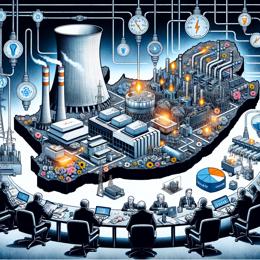
The state of energy in South Africa is in a critical condition, compounded by years of mismanagement and a departure from a public-service ethos. Electricity Minister Kgosientsho Ramokgopa, since assuming office in March, has not been able to steer the utility towards stability. Eskom, once hailed as a beacon of progress offering affordable electricity to millions, has now become emblematic of South Africa's energy woes.
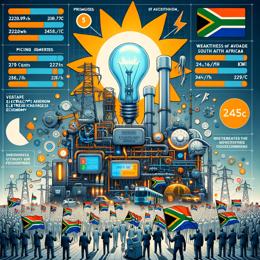
Eskom's challenges are multifaceted and stem from historical decisions that prioritized neoliberal policies over the public interest. The Mandela era, whilst ushering in democracy, saw Eskom transform from a state agency into a public corporation driven by profit motives. This shift resulted in higher tariffs, the curtailment of rural electrification, and widespread disconnections that led to protests and illegal reconnections.
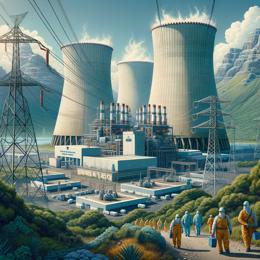
The failures of Eskom cannot be pinned only on the recent extreme load shedding caused by issues such as boiler tube leaks. It points back to decisions throughout the years, from embracing a limited role in renewable energy developments to questionable contracting decisions, like those involving Hitachi and Chancellor House for the Medupi and Kusile power stations. These missteps not only added economic strain but also contributed to the climate change burden that future generations will have to bear.
The recent Integrated Resource Plan, spearheaded by Ramokgopa and Mineral Resources and Energy Minister Gwede Mantashe, shows a concerning commitment to coal and other carbon-intensive energy sources. This approach undermines the Just Energy Transition Partnership's goal to fund decarbonization through concessional finance, a particularly ill-advised strategy given the country's existing foreign debt and local financial liquidity.
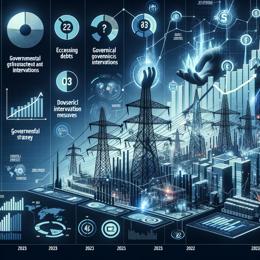
The National Planning Commission has identified egregious cost and time overruns in South Africa's mega-projects. Medupi and Kusile stand out with cost increases of 293% and project delays spanning eight years, contributing significantly to the economic turmoil evidenced by load shedding. Strikingly, even in their assessments, the consequential environmental impacts are often overlooked.
When considering the full extent of Eskom's energy debacle, it's crucial to include the environmental economics perspective. The Hartwick Rule helps evaluate whether the country is depleting its non-renewable resource base at an unsustainable pace. However, current practices suggest a disregard for the prudent management of natural capital.
The over-reliance on coal not only impacts the environment but also exposes South Africa to the risk of international sanctions and trade barriers, further threatening the traditional export market for South African commodities. To add insult to injury, the potential loss of access to the African Growth and Opportunity Act due to South Africa's position on Israeli policies may further complicate trade.
The bigger picture reveals a dire need for a recalibration of South Africa's energy policy, favoring renewables and efficient small-scale production over gargantuan, unsustainable projects. While some parties like the Climate Justice Charter Movement are gearing up to tackle these issues head-on, it's clear that the solution may well lie in a combination of policy overhaul and zealous civil activism. The need for a shift is urgent if we are to salvage not only Eskom's legacy but secure a sustainable future for the coming generations.
Leave a Comment
Recent News