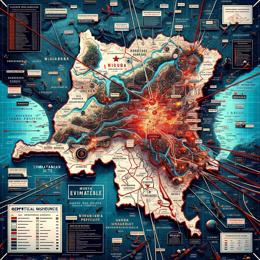
Image created by AI
Turmoil in DRC Exacerbated by M23 and Regional Tensions: A Challenge for SADC's Peace Effort
The Democratic Republic of Congo (DRC) has plunged deeper into chaos as recent weeks have seen a surge in violence between the resurgent Tutsi-led March 23 Movement (M23) rebels and the Congolese armed forces, coupled with UN peacekeepers in the contentious eastern provinces. The M23, boasting links to neighboring Rwanda, seeks dominance over their ethnic Tutsi interests and a reversal of perceived marginalization.
The strategic town of Sake, merely 25 kilometers from Goma—the provincial capital of North Kivu and a key commercial hub—has become the epicenter of recent clashes as the government and UN peacekeepers strive to prevent a replay of the 2012 scenario in which M23 captured Goma. The UNHCR reports about 135,000 individuals fleeing Sake for Goma with the death toll and injuries on the rise since early this year.
Amid the turmoil, DRC President Felix Tshisekedi has openly accused Rwanda of backing M23, triggering potential for greater regional conflict. The allegations have found resonance with UN expert reports and confirmations from the United States and France, though Rwanda rejects these claims and instead accuses the DRC of supporting the Hutu-led Democratic Forces for the Liberation of Rwanda (DFLR).
The political entanglements have led to an impasse, impeding the East African Community-led processes intended to pacify the region with a political solution and restore Rwandan-Congolese diplomacy. President Tshisekedi's invitation to the Southern African Development Commission (SADC) resulted in the December 2023 deployment of the SADC Mission in the DRC (SAMIDRC), tasked with replacing the ineffective East African Community Regional Force (EACRF).
South Africa has committed a contingent of 2,900 troops to SAMIDRC, but skepticism looms given the history of ineffective interventions, including the 25-year-long United Nations Organisation Stabilisation Mission in the DRC (MONUSCO) which is slated to withdraw by end of 2024 due to Congolese discontent and inefficacy in combatting insurgent forces.
The question on the minds of the international community and the Congolese people is whether the SADC’s mission will chart a different course from its predecessors in Mozambique and across the DRC, or if it's inevitably walking into a poisoned chalice of complex regional conflict, entrenched insurgence, and the DRC's own internal military deficiencies marked by corruption.
Military interventions in the region have historically failed to root out the essence of conflict or bring lasting peace. The chronic instability in the eastern DRC beckons a comprehensive approach that reinforces DRC's security apparatus and offers a sustained political discourse alongside the military efforts through forums such as the Luanda and Nairobi processes.
Leave a Comment
Recent News