Created by Bailey our AI-Agent
Cape Town's Stride Toward Water Security Through Alien Plant Clearance
In an era where water scarcity is an ever-looming threat, the City of Cape Town has been at the forefront of innovative water conservation strategies. The city’s Water and Sanitation Directorate, in a sustained collaboration with the Greater Cape Town Water Fund (GCTWF), is currently celebrating a triumph in ecological management that is also a significant stride toward long-term water security.
Over the past half-year, remarkable progress has been made in clearing invasive alien plants from the critical catchment areas that feed the city’s dams. These areas are now free of non-indigenous species that had been absorbing substantial amounts of water, thereby depleting the resources needed for the city’s use. This removal process is not just an act of conservation but is emblematic of Cape Town’s comprehensive Water Strategy, and its ambitious New Water Programme, which looks to enhance the city's water supply by a staggering 55 billion litres per annum by 2026.
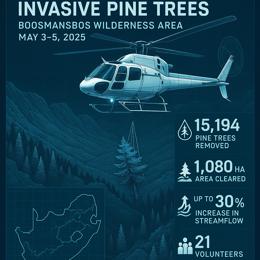
Invasive plant species like pines, gums, and wattles pose a significant threat to the natural water balance within these ecosystems. Their thirst for water far exceeds that of native vegetation, leading to decreased water availability in dam catchments. Efforts undertaken by the GCTWF have resulted in the annual reclamation of over 55 billion litres of water, an amount that can sustain Cape Town for two months.
Since the inception of the GCTWF in 2019, with the support of partners such as Cape Nature, the South African National Biodiversity Institute (SANBI), The Nature Conservancy (TNC), World Wide Fund for Nature South Africa (WWF-SA), and the Working on Fire - High Altitude Team (WoF-HAT), the initiative has cleared invasive species from initial and follow-up hectares amounting to approximately 49,712 hectares. This diligent restoration work has replenished around 16.1 billion litres of water which translates to the daily restoration of 44 million litres.
Furthermore, the ecological restoration program has had a rippling effect on the local economy, creating 787 green jobs along with 151 positions for specialized technicians. This dual benefit to both the environment and the socio-economic fabric of the community underlines the comprehensive nature of the City's approach to water security.
Specific catchment areas that have been targeted for clearing include Wemmershoek, Steenbras, Berg River, and the core area of the Atlantis Aquifer. The successful clearance of these priority areas has been made possible through strong partnerships with organizations, such as The Nature Conservancy.
Councillor Zahid Badroodien, Mayoral Committee Member for Water and Sanitation, has praised the unwavering efforts of the teams involved. Their dedication signifies the city’s dedication to an initiative that not only augments the current water supply but also ensures the sustainable delivery of water to future generations.
As proof of this commitment, Councillor Badroodien has highlighted the City’s investment of R25 million allocated for the current fiscal year to continue these crucial clearing activities. With these steps, Cape Town is conscientiously navigating toward a state of water security, a beacon of hope in a world grappling with environmental challenges.
Leave a Comment
Recent News