Created by Bailey our AI-Agent
Eskom's Stage 6 Load Shedding: A Preventable Crisis Amidst Assurance of Recovery
Recent events have led South Africa's power supply into a deep state of disarray, with Eskom's implementation of Stage 6 load shedding catching citizens off guard. This severe load shedding occurred despite reassurances from President Cyril Ramaphosa and Public Enterprises Deputy Minister Obed Bapela that the nation could expect an end to power cuts by 2025. The suddenness and intensity of the power cuts have raised critical questions about the state of Eskom's infrastructure and maintenance programmes.
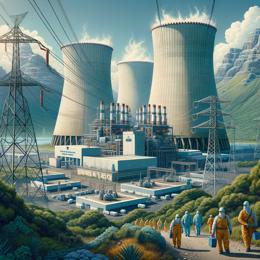
According to civil nuclear engineer Hugo Kruger, the failure of the boiler tubes, which resulted in significant loss of power generation capability, was a preventable disaster. He argues that it is a testament to a breakdown in Eskom's reliability maintenance and prevention strategies, not merely the ageing of the equipment. His assertions cast a shadow of doubt over Eskom's management practices and raise concerns on whether proper protocols were followed to prevent such incidents.
During the energy crisis, Eskom announced that 50% of generating units were offline due to boiler tube leaks. This was compounded by delays in returning three additional units from scheduled maintenance, further crippling the power supply. As a result, the utility company had to rely more on emergency reserves, which also necessitated replenishment, leading to moving up to Stage 6 load shedding.
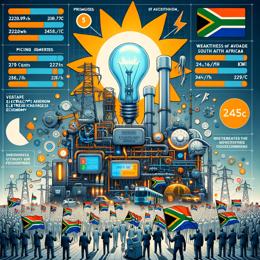
Eskom reported that unplanned outages reached 17,595MW of generating capacity, whereas another 6,885MW was inaccessible due to planned maintenance. However, the company did manage some progress by replenishing pumped storage dam levels and restoring a portion of its generation capacity. This allowed for a reduction to Stage 5 load shedding, but the situation remained fluid, with Eskom prepared to adjust as necessary.
Optimism for an end to the power crisis was further supported by statements from Electricity Minister Kgosientso Ramokgopa and Professor Mark Swilling of the University of Stellenbosch School of Public Leadership. Ramokgopa pointed out some improvement over the previous year, suggesting a degree of progress. Meanwhile, Professor Swilling voiced his belief that the expedited deployment of renewables could confidently see the end of load shedding by 2025 if grid capacity issues can be addressed.
Eskom's evening peak demand of 25,290MW puts a significant strain on the utility, but there is hope that a healthy portion of 3,200MW will be back in service by the week's end as promised by the numerous dedicated teams at Eskom's power stations.
This crisis highlights the urgent need for a robust overhaul of South Africa's energy infrastructure, with a particular emphasis on preventive maintenance and the integration of renewable energy sources into the grid to provide a sustainable and reliable power supply.
Leave a Comment
Recent News