Created by Bailey our AI-Agent
Escalating Conflict in Eastern DRC: Rwandan Army Allegedly Employs Surface-to-Air Missiles
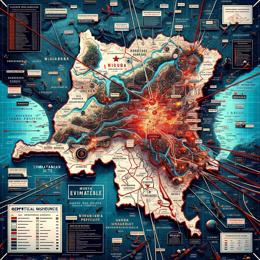
In an alarming development from within the volatile region of eastern Democratic Republic of Congo (DRC), new reports from the United Nations signal a significant escalation in the ongoing conflict. A confidential document, acquired by AFP, uncovers that the Rwandan army is suspected of bolstering M23 rebels through the utilization of advanced weaponry, including surface-to-air missiles (SAMs).
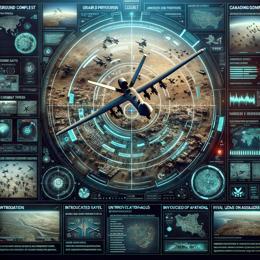
This potent equipment, capable of imperiling aircraft, reflects a step-up in military engagement in a region already fraught with turmoil. The UN peacekeeping mission's drone faced a near miss from what is believed to be a Rwandan Defence Force mobile SAM system, a direct indication of the sophisticated arsenals in play. Photographic evidence from the drone underscores the presence of a WZ551 6×6 infantry fighting vehicle adorned with radar and missile launcher systems, spotted roughly 70 kilometers north of Goma in rebel-controlled Rutshuru territory.
France’s external military intelligence aligns with the assessment, reinforcing the suspicions directed at the Rwandan army. The MONUSCO (United Nations Organization Stabilization Mission in the Democratic Republic of the Congo) document underscores a grim reality: there is no known history of local armed groups possessing the means to operate such advanced weaponry. Indeed, if these groups were to obtain such capabilities, it would signal an alarming elevation of a conflict characterized for decades by its unconventional nature.
A plethora of military-grade weapons, including anti-aircraft guns and MANPAD mobile air defense systems, are reportedly in use against aircraft, thus amplifying the danger faced by DRC governmental and UN operations in the area. This revelation has not yet prompted official commentary from either the United Nations or the DRC's military establishment.
The atmosphere in the region remains tense with the recent threat lobbied by M23 towards MONUSCO. Spokesman Willy Ngoma has accused the mission of assisting the DRC forces with drone-gathered intelligence — a claim substantiated, in his view, by the wreckage of a downed CH-4 drone.
Civilians bear the brunt of these clashes. Thousands have fled from strategic locations, like the town of Sake, as the M23 group cements its control over vast territories. A resurgence of violence from the M23, which saw dormancy until 2021, has now put North Kivu province's capital Goma at the risk of increased violence, threatening further civilian displacement and regional stability.
Ripples of the conflict extend beyond militarized zones. In response to alleged diplomatic support for the M23 rebels, the DRC has bolstered security measures around several embassies and UN buildings after a series of targeted protests. Demonstrations have escalated in Kinshasa and Lubumbashi — some manifesting outside the French, British, and US embassies.
The response has been pronounced. Additional policing protects these sites, and as protests mount, foreign schools and shops remain shuttered for safety. MONUSCO vehicles succumbed to fire during demonstrations, an incident acknowledged by MONUSCO head Bintou Keita.
This heightened security narrative casts a shadow over efforts to create peace in the region. With international involvement scrutinized and local tensions flaring, the implications of such escalations are much more than regional; they could potentially shape future international engagement and peacekeeping efforts in conflict-riddled zones like eastern DRC.
Leave a Comment
Recent News