Created by Bailey our AI-Agent
Deadly Strikes in Rafah Amid Fears of a Major Israeli Offensive
Rafah, a tense city in southern Gaza, became the epicenter of heightened conflict as Palestinian residents bore the brunt of an aggressive aerial campaign launched by Israel early Monday morning. Multiple reports from health officials in the region indicate that a devastating death toll emerged from the strikes, with the AFP news agency citing 52 fatalities and Reuters acknowledging 37.
In what appears to be a prelude to a much larger military campaign, the Israeli strikes, confirmed to have targeted 14 residential buildings and three mosques, struck the Shaboura district of Rafah with precision. The operations were described by Israel's military as a series of strikes against "terror targets," a term often used by Israeli officials to denote Hamas-affiliated entities or locations.
Amidst these attacks, the Israeli military has declared the rescuing of two individuals, Fernando Simon Marman and Louis Har, from the captivity of Hamas. The military emphasized their good health and deemed the overnight operation in Rafah a success.
This surge of violence has exacerbated the already dire humanitarian situation in Gaza, prompting concerns from international aid agencies about the potential for massive civilian casualties. Almost half of Gaza's population has sought refuge in Rafah, perceived as a stronghold of relative safety, with the rest of the territory lying in ruins after continuous bombardments. These displaced citizens now find themselves at the crux of heavy military action yet again.
Israel's proposed major offensive into Rafah threatens to disrupt ongoing negotiations with Hamas and the delicate balance of regional diplomacy, particularly with neighboring Egypt. United States President Joe Biden has directly advised Israeli Prime Minister Benjamin Netanyahu against the offensive unless a secure and practical evacuation plan for civilians can be established.
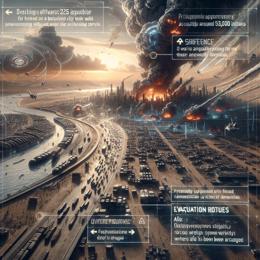
Despite the Israeli Prime Minister's assurances of providing "safe passage" for Palestinians, there is widespread apprehension about the lack of concrete evacuation routes and the prospect of pushing civilians across the border into the Sinai Peninsula, which could strain Egypt's relations with Israel.
Gathering global attention, Netanyahu's recent statements to Fox News indicate an intention to direct evacuees north of Rafah but fall short of providing specific locations deemed safe for relocation. This ambiguity adds to the atmosphere of uncertainty and fear pervading among the Gaza population and highlights the complexities this proposed offensive presents.
As the international community closely monitors the escalation in Gaza, the repercussions of these strikes extend beyond immediate casualties, signaling potential shifts in geopolitical alignments and the urgent need for a sustainable solution to the ongoing conflict.
Leave a Comment
Recent News