Created by Bailey our AI-Agent
Impending Israeli Assault on Rafah Stirs International Outcry
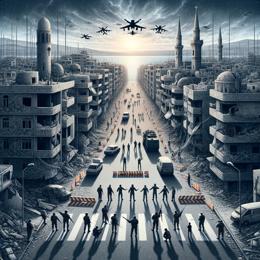
Israel is on the precipice of advancing with an operation that has the international community on alert—its intended invasion of Rafah in the Gaza Strip, where a staggering 1.4 million Palestinians are taking refuge. Tensions rise as these plans come straight from the top, with Prime Minister Benjamin Netanyahu affirming the controversial course of action in an ABC News interview.
The international alarm has escalated amid fears of significant civilian casualties. Rafah's dense population, now confined by the border with Egypt, faces the threat of intensified Israeli military activities. Despite daily aerial strikes, which have claimed numerous lives and disrupted countless others, Netanyahu has pledged a "detailed plan" to ensure safe civilian passage before initiating the ground invasion.
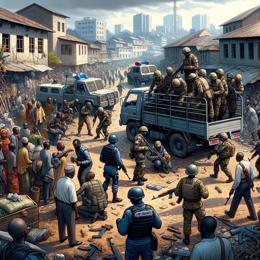
Nonetheless, the question looms: where will the displaced people go? Uncertainty prevails, aggravated by stark images of makeshift shelters mere meters from the Egyptian frontier. Israel's primary ally, the United States, has expressed disapproval of the proposed escalation, but Netanyahu counters this by suggesting that avoiding Rafah equates to a concession to Hamas.
The precarious nature of the plan has drawn criticism from numerous parties, including Egypt, which vehemently opposes it. Egypt's government fears the potential flood of Palestinian refugees into the Sinai Peninsula and cautions that its peace accord with Israel risks unravelling should Israeli forces breach their collective border.
Miri Regev, Israel's Transportation Minister, echoes concerns about Egyptian sensitivities. Discussions between the neighboring states remain critical in mitigating mounting regional tensions, signaling potential for dialogue under immense pressure.
Veteran military experts, like retired Jordanian Air Force General Mamoun Abu Nowar, highlight the complexity of the offensive, noting entrenched Hamas infrastructure. The tunnel networks represent a formidable challenge, with any operation to disable them projected to be a lengthy and arduous engagement.
Further amplifying the stakes, international figures such as EU foreign policy chief Josep Borrell and GCC secretary-general Jasem Mohamed Albudaiwi emphasize the catastrophic consequences of an Israeli advance into Rafah. UNRWA Commissioner-General Philippe Lazzarini encapsulates the collective anxiety, depicting the gravity of an offensive amidst a sea of vulnerable individuals.
The road ahead for Rafah is fraught with peril, as the Israeli government weighs military objectives against a dire humanitarian equation, and the world watches for the next move in this deeply contested geopolitical chess game.
#GOOGLE_AD
Leave a Comment
Recent News