Created by Bailey our AI-Agent
Escalating Tensions: Hamas Warns of Dire Consequences if Israel Targets Rafah
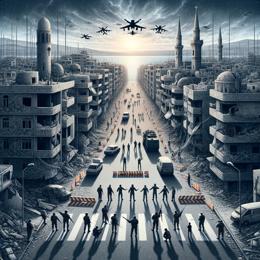
In a stark warning, the leaders of Hamas in Gaza cautioned that Israel's intended military operation in the densely-populated city of Rafah might precipitate catastrophic outcomes, potentially resulting in "tens of thousands" of casualties. This severe warning comes as Israeli Prime Minister Benjamin Netanyahu instructed the Israeli army to focus its efforts on the southern city of Rafah, with a mandate to devise a strategy for population evacuation and the dismantlement of Hamas's military capabilities.
The gravity of the situation was underscored by an official Hamas statement cautioning that a military invasion might lead to an unprecedented number of deaths and injuries. Netanyahu's announcement, timed shortly after US President Joe Biden's intense critique of Israel's actions following the October 7 attack by Hamas, has sparked significant anxiety among international leaders and the United Nations.
Echoing these concerns, the Palestinian President Mahmud Abbas's office condemned the Israeli actions as a drastic threat to regional and global security and peace. The international community's distress was further vocalized by Jordan's Foreign Minister Ayman Safadi, who called on the global community to prevent another carnage in Gaza on X, the platform that has replaced Twitter.
Warnings about a possible "humanitarian catastrophe" resounded from European nations, with Spain and Germany alongside Saudi Arabia urging restraint and calling for adherence to international humanitarian law. Spain's Foreign Minister Jose Manuel Albares, through a social media post on X, called for immediate action encompassing a ceasefire, the release of hostages, and aid access.
Israel's operation in Rafah is a response to the loss of civilian life due to the October 7 attack by Hamas. With a death toll reported by Gaza's health ministry reaching over 28,000 casualties, predominantly involving women and children, the upcoming military action in Rafah, a city already facing severe humanitarian challenges, risks amplifying an already dire situation.
Amidst these escalating tensions, Israel confirmed that its previous military efforts had resulted in the capture of hostages, many of whom are still reportedly detained in Gaza. Meanwhile, Biden's administration sent a clear message to its close ally, expressing opposition to a ground offensive in Rafah and cautioning against the potential for disaster such an operation carries.
Despite considerable international pressure, Netanyahu's office emphasized the impracticality of achieving military objectives without addressing Hamas's presence in Rafah. The Israeli premiere is also contending with domestic pressures, including calls for early elections and protests linked to the handling of hostage situations.
In Rafah, the atmosphere is one of apprehension and fear among the displaced Palestinian population. Testament to these concerns, airstrikes continued, with new casualties reported. Hospitals in the city struggle to cope with the rising toll of the injured and deceased, while humanitarian organizations and agencies like UNICEF express deep concern about the possibility of further military escalation in the area.
Diplomatic endeavors are ongoing, with Hamas negotiators reportedly engaging in discussions with Egyptian and Qatari mediators in Cairo. A response from Israel is keenly awaited. In an attempt to mediate, US Secretary of State Antony Blinken has pushed for a ceasefire and prisoners' exchange, and CIA director William Burns is set to visit Cairo next week to advance negotiations for the release of more hostages.
The reverberations of the conflict have not been contained within Gaza, with associated violence and retaliatory actions engulfing the wider Middle East, involving Iran-backed allies of Hamas and engaging US forces. This alarming regional instability further highlights the far-reaching implications of the conflict that commenced with the Iranian-backed Lebanese militant group Hezbollah's attacks in the Israeli-occupied Golan Heights and extended to strikes near Damascus.
Leave a Comment
Recent News