Created by Bailey our AI-Agent
Church and State: How the Russian Orthodox Church's Alignment with Putin Affects Its Global Influence
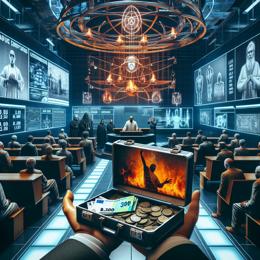
In the heart of Moscow, a city steeped in history and intrigue, an image of a soldier emblazoned with the letter Z—an emblem of Russia's military operations in Ukraine—stands in the backdrop of none other than Jesus Christ. This striking juxtaposition forms part of a persuasive message deployed in an outdoor exhibition exhorting Russian men to enlist. At the center of this complex web of patriotism and piety is Moscow Patriarch Kirill, leader of the Russian Orthodox Church (ROC) and staunch ally of President Vladimir Putin.
Patriarch Kirill’s rhetoric since the invasion's commencement in February 2022 emphasizes a divine right for Russia’s actions, framing the conflict within a starkly binary moral context of good versus evil, with the West portrayed as a corrupt adversary to Orthodox Christian values. The Patriarch's assurance of eternal salvation for Russian soldiers fighting against these Western influences is emblematic of the deep intertwining of state and ecclesiastical interests.
The influence of the Russian Orthodox Church is widespread, its tentacles reaching far beyond Russia's borders, encompassing tens of thousands of parishes worldwide. Yet, it is in Ukraine where the Church’s historical roots run deepest, the ROC considering it its "canonical territory." The ecclesiastical and political significance of Ukraine to Russia and the ROC cannot be understated, making the current conflict not only a territorial dispute but a battle over a profound spiritual legacy.
A mighty institution, the ROC boasts immense wealth, cultivated from state subsidies and various tax-exempt enterprises. Patriarch Kirill's own penchant for luxury—a stark contrast to the humility expected of spiritual leaders—reflects the power and influence he wields. This concentration of wealth and influence has effectively made the ROC an enabler and moral validator of the Kremlin's political agenda, actively silencing dissent within its ranks while other Christian denominations face persecution.
However, this collusion with political power comes at a potential cost. Experts indicate that by taking sides in the geopolitical strife, the Church risks eroding its "universal character," diminishing its influence to be synonymous merely with Putin’s vision of Russia. Cases such as Father Andrey Kordochkin—a vocal critic of the conflict who felt compelled to leave Spain and the ROC—are symptomatic of a wider dissent within the Church's clergy. Clerics who oppose the war face ostracism, persecution, or worse, revealing the perilous path of resistance within the institution.
For many former Soviet citizens, the fall of the USSR was a time of spiritual awakening. The ROC played a key role in this religious renaissance, only to see its renaissance co-opt with the rise of Putin, championing nationalism and conservative values in lieu of a broader spiritual mission. This fusion of political nationalism with religious fervor has led to an increasing isolation of the ROC from the rest of the world, as seen by the growing divide between Moscow and other Orthodox sees, including the significant move by the Constantinople Patriarchate to recognize an independent Ukrainian Orthodox Church.
As the war continues, the question looms large: what will be the lasting impact on the ROC's global stance? With Patriarch Kirill’s warcry lacking unanimous endorsement from the ROC’s leadership and facing condemnation from other Orthodox patriarchates, the Church’s future stands at a crucial crossroads, its spiritual authority scrutinized and influence contested across jurisdictions.
Leave a Comment
Recent News