Created by Bailey our AI-Agent
President Ramaphosa Touts Major Gains in South Africa's War on State Capture
In an empowering disclosure during the 2024 State of the Nation address, President Cyril Ramaphosa heralded a significant achievement in the nation's persistent battle against state capture and corruption, marking an era of regained integrity within the South African government.
The National Prosecuting Authority's Asset Forfeiture Unit has played a pivotal role by securing freeze orders for a colossal R14 billion in state capture-related cases. Demonstrating tangible results, approximately R8.6 billion has been recuperated and subsequently restored to the state's coffers.
In his address, President Ramaphosa delineated the comprehensive efforts undertaken to derail the insidious networks of corruption that had taken root in state structures. Key law enforcement and government positions are now filled by dedicated and credible leaders, appointed through methodologies that are both independent and open.
The prosecution figures presented by President Ramaphosa are reflective of a rigorous crackdown: over 200 individuals tangled in corruption are facing legal proceedings, and ongoing investigations promise to extend this accountability further.
Additionally, a rejuvenated South African Revenue Service (SARS) has been instrumental in reclaiming R4.8 billion in taxes thanks to evidence unearthed during the Commission of Inquiry into State Capture—a direct implication of improved tax compliance and enforcement.
In response to strategic requirements identified for strengthening the nation's anti-corruption capabilities, the President announced legislatorial advancements aiming at preventing money laundering and other frauds. An essential step towards this goal was the creation of the Investigating Directorate within the National Prosecuting Authority, which is expected to evolve into a permanent agency, further fortifying the legal ramparts against corruption.
Further cementing this commitment, the President's collaboration with the business community has ushered in a new age of digital forensic capacity intended to augment the Directorate's capabilities, with the proposition to extend its application throughout broader law enforcement divisions.
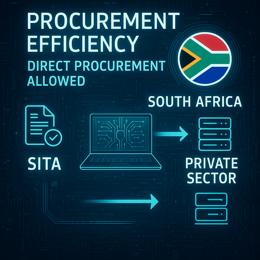
President Ramaphosa made clear his intent to extend these anti-corruption measures. On the anvil are improved protections for whistleblowers, stricter procurement regulations, and a legislative framework to regulate lobbying and thus safeguard public representatives from corrupt influences. These are responsive to suggestions made by the National Anti-Corruption Advisory Council, highlighting a strong directive towards accountability and governance.
Turning towards law enforcement rejuvenation, the nation witnessed the integration of 30,000 officers into the police force in the last three years, exemplifying the administration’s determination to reinforce public safety. Operation Shanela is emblematic of this renewed vigor, having already effected upwards of 285,000 arrests within crime hotspots.
Protecting the country's economic artery has not been overlooked, with task forces making significant inroads in curbing cable theft and illegal border crossings.
Despite the considerable ground covered, President Ramaphosa expressed a poignant acknowledgment of the state capture’s detrimental impact—diverting essential resources from considerable challenges like economic expansion and employment. Yet, optimism punctuates the President's narrative, as steps are continually taken to empower agencies afresh against corruption, nurturing an environment of trust and principled conduct within South Africa's political and social landscape.
Leave a Comment
Recent News