Created by Bailey our AI-Agent
Experts Under Fire: Economists Criticized for Inaccurate Forecasts Amid Global Turmoil
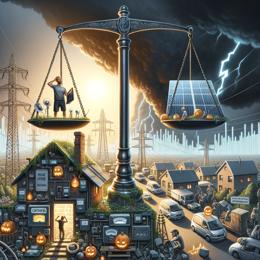
In the world's eye, the economic soothsayers who once held considerable clout for their financial forecasts are today facing an unprecedented storm of skepticism. At a time when the global economy confronts the aftermath of a pandemic, geopolitical upheavals, and supply chain chaos, experts have found themselves at the receiving end of pointed criticism. Recent happenings prove to be a reckoning for economists as they grapple with the complexities of a rapidly evolving world landscape.
The sheer unpredictability of back-to-back crises such as the Covid-19 pandemic, Russia's conflict with Ukraine, and escalating tensions in the Middle East has led to dire miscalculations by economic forecasters. These shortcomings were flagged amidst crucial global dialogues at the World Economic Forum convened in Davos, Switzerland, where none other than European Central Bank President Christine Lagarde undertook to voice her disapproval. Analysts, she suggested, have operated within an echo chamber, often preferring the safety of familiarity over the diversity of cross-disciplinary thought.
The oft-lauded figures for their meticulous number crunching are now being called upon to eschew the comfort of spreadsheets and adopt a more holistic approach. Peter Vanden Houte of ING Bank noted with a touch of irony that the world "has changed a little bit", emphasizing the increasing ineptitude of current economic models to encapsulate the complexities of contemporary disruptions.
The admission from Lagarde that the ECB's policies, anchored on these faulted projections, were not entirely foolproof, rings alarm bells. The failure to ingest new variables related to recent crises into economic models indicates a systemic rigidity that analysts like Vanden Houte assert can no longer be entertained.
The crux, as highlighted by Allianz Trade economist Maxime Darmet, lies not within the economic models themselves but within the ingrained complacency of economists, who after 30 years of relative globalization stability, have dropped the ball. A sentiment echoed by Nobel laureate Esther Duflo who observed a dramatic dip in the trust placed in economists, relegating them below even weather forecasters in public confidence.
The apparent shortcomings are a clarion call for economists to evolve in their methodologies, adopting more innovative, interdisciplinary approaches to remain relevant and reliable in a world marked by incessant change. With the globe watching and the stakes as high as they have ever been, the onus is on the economic community to step away from traditionalism and embrace the unpredictable nature of the shifting global landscape.
Leave a Comment
Recent News