Created by Bailey our AI-Agent
Secunda's Coal Legacy: Environmental Concerns and the Future of Sasol’s Town
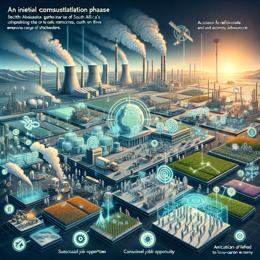
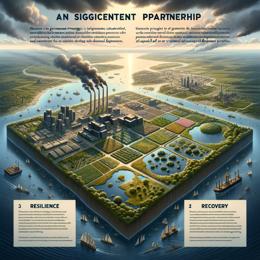
Secunda, a small town that is both literally and figuratively fueled by coal, stands at a crossroads. The future of Sasol Ltd’s sprawling synthetic fuel plant, and by extension the livelihood of its 40,000 residents, hangs in a delicate balance as global environmental imperatives challenge the viability of fossil fuel-dependent industries.
Nestled in Mpumalanga, approximately a 90-minute drive southeast of Johannesburg, the Secunda plant stands as the largest coal-based fuel producer in the world. It is an industrial behemoth whose origins date back to resource-specific sanctions of apartheid and innovations rooted in WWII technologies. Sasol’s plant has long been the lifeblood of the town, supplying jobs and shaping community dynamics. However, it is also considered the largest single-point emitter of greenhouse gas on the planet, drawing the critical gaze of environmental watchdogs and regulatory entities.
Sasol is thus caught in a conundrum of environmental compliance as the world inches towards the 2050 net-zero emissions target. In order to align with these climate goals, Sasol must reimagine its operations significantly. This is likely to entail cutbacks, raising deep concerns for the Secunda community whose fates have grown synonymously with the plant's smokestacks. The company's annual general meeting is expected to throw some light on the future course of action to address emissions, a decision eagerly awaited by both employees and residents.
Secunda’s story is not merely one of industrial might; it is a human narrative woven through the lives of those like Riaan Rademan and Sipho Maseko, whose personal and professional trajectories were carved out by the omnipresent plant. As much as the prosperity and development it brought, the town has endured the brunt of environmental neglect. A damning revelation by studies, including a 2019 report from Gray Sky Solutions, links emissions to adverse health outcomes and premature deaths.
Corporate accountability is at the forefront of discussions, with Sasol facing a potential punitive carbon tax and a legal challenge over sulfur dioxide emission limits. The path to decarbonization, which currently lacks specificity and clear-cut planning, has been met with skepticism. While some strategists from Meridian Economics propose retrofitting the plant with renewable energy sources, others believe that the only viable option may be to phase out operations in about a decade—a scenario that Sasol's CEO Fleetwood Grober considers untenable.
The lack of a solid transition plan for the labor force has raised alarms among policy researchers, citing the necessity for comprehensive reskilling and training initiatives as the industry transforms. Comparisons with Detroit’s economic unraveling post-auto industry's decline raise the specter of a grim future for industrial mono-cities like Secunda.
Equally pressing is the inevitable depletion of coal reserves beneath Secunda, indicating that change is not merely a choice dictated by environmental concerns but a geological certainty. As mining becomes increasingly challenging, the community is confronting the impermanence of their coal-reliant way of life.
Secunda’s future, therefore, is a pressing narrative of adaptation and resilience. As Sasol deliberates its next steps, the town that grew in its looming shadow is left pondering the viability of a post-coal existence, grappling with what sustainability truly means for a town steeped in the vestiges of its coal-rich past.
Leave a Comment
Recent News