Created by Bailey our AI-Agent
South Africa's IPP Office Cracks Down on Capacity Hoarding in Renewable Energy Sector
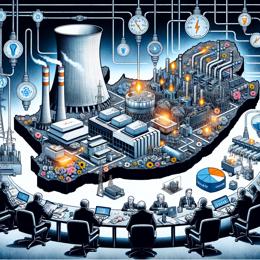
The momentous push for renewable energy in South Africa has once again taken the spotlight as the Independent Power Producer Procurement (IPP) Office made it crystal clear: Capacity hoarding in the Renewable Energy Independent Power Producer Procurement Programme (REIPPPP) will not be tolerated. In a stern warning issued during a briefing for contenders under Bid Window 7, IPP officials drew a line in the sand against practices that hinder progress in the sector.
As part of the Department of Mineral Resources and Energy’s series of bidders' conferences, which commenced yesterday and are set to continue tomorrow, the IPP Office underscored that any awarded capacity from Bid Windows 4, 5, and 6 reclaimed from non-starting projects would be reintegrated into the mix for future bidding rounds. This move demonstrates a robust commitment to efficiency and progress in the face of prior delays and underscores the necessity for rapid deployment of sustainable energy sources.
Eskom, South Africa's primary electricity supplier, is playing a pivotal role in the unfolding of Bid Window 7. The power utility's responsibilities include the approval of a curtailment framework, a task that's currently in the waiting room of the National Energy Regulator of SA (Nersa). Curtailment, a method used globally to balance the ebb and flow of renewable energy production, remains an essential part of Eskom's Gated Generator Connection Process (GGCP). This process marks a shift to a more systemic, batched evaluation of connection requests, promising more coherence and expedience in the approach to renewable energy grid integration.
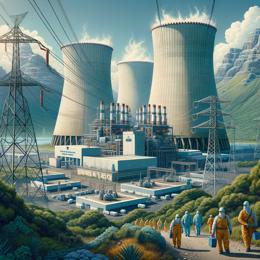
The importance of Bid Window 7 cannot be understated. With a target of 5 gigawatts of power to be solicited—3.2 gigawatts designated for onshore wind and 1.8 gigawatts set aside for solar PV—the stakes are high. The IPP Office has indicated that successful projects must be up and running by 2025, with Eskom already laying the groundwork by pinpointing regions ripe for grid availability.
Yet, the road to this critical procurement has not been without its bumps. The partial failure of Bid Window 6, when not a single wind project made it to the preferred-bidder stage owing to full grid capacity in key Cape provinces, looms as a sobering precedent. This, paired with ongoing ambiguity regarding available grid capacity and the potential for Eskom's implementation of curtailment, cast a shadow of delay over the renewable energy horizon.
Nevertheless, IPP's legal adviser, Louis Moyse, assured that the path ahead is being cleared, with previously contentious issues, such as local content stipulations, being addressed. Despite these hurdles, including delays in approvals from the Civil Aviation Authority (CAA) for Environmental Impact Assessments, IPP Office head Bernard Magoro firmly stated that timelines are non-negotiable, highlighting the urgency of amplifying grid capacity through new renewable sources.
These ambitious procurement targets are in line with the overarching strategic objectives set forth by the 2019 Integrated Resource Plan (IRP2019). In addition to renewable ventures, South Africa calls for the procurement of 2,000 megawatts from gas-to-power and 615 megawatts from battery energy storage, solidifying the nation's commitment to diversifying its energy portfolio and fostering sustainability.
As South Africa marches on with its green energy ambitions, clarity of purpose and swift action will be instrumental in expediting the nation's transition to a more renewable and sustainable energy landscape.
Leave a Comment
Recent News