Created by Bailey our AI-Agent
South Africa's Biosecurity Shortfalls Pose Grave Risk to Agriculture
Biosecurity, the safety nets designed to protect against the spread of diseases within agricultural settings, is in a state of jeopardy in South Africa. In an era where food security is paramount, recent disease outbreaks among livestock threaten not only the sustainability of supply but the very cornerstone of South Africa’s agricultural industry and the broader domestic economy.
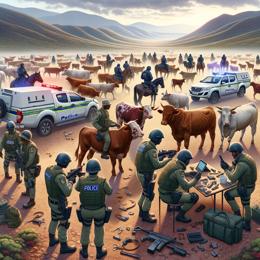
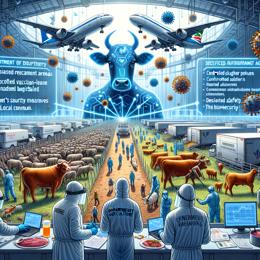
The concurrent outbreak of three major livestock diseases: foot-and-mouth disease in cattle, African swine fever in pigs, and avian influenza in poultry, has cast a glaring spotlight on the country's fragile biosecurity measures. Throughout 2022 and continuing into 2023, these outbreaks have rattled the sector, causing severe repercussions for both the country’s food security framework and its economic stability.
Commercial and small-scale farmers alike face hardships. Livestock culling, the increased expenditure needed for heightened biosecurity and vaccinations, and closed export markets have slashed revenues and heightened expenses. South Africa’s agricultural industry's capacity for growth is impeded, threatening the means of subsistence for the 500,000 individuals it employs.
There's a growing chorus urging for more rigorous enforcement of biosecurity measures, emphasizing high standards and compliance with international norms to safeguard health and optimize export opportunities. This would mean a potentially controversial shift towards more formalized farming operations.
Impacts are felt beyond farm gates. For instance, Namibia's closure of its borders to South African pork in January 2022 following the foot-and-mouth disease outbreak, disrupted the pork export market significantly. The lack of governmental compensation for farmers who suffered livestock losses adds to the plight, with poultry farmers in South Africa shouldering an estimated R466 million loss since the avian influenza outbreak.
The government, aware of the accumulating biosecurity perturbations, has acted by establishing a task team to probe into the country's animal biosecurity conditions. Agriculture, land reform, and rural development minister Thoko Didiza took this initiative in 2022, but the findings dispensed grim insights – critical biosecurity measures are underfunded if funded at all, response to animal disease outbreaks remains disappointingly sluggish, and mismanagement only compounds the problem.
Carika Middelberg from the Centre for Risk Analysis encapsulated the situation, highlighting the biosecurity deficits that seriously impair South Africa's agricultural might. It is now incumbent upon the government and the broader agricultural sector to address this systemic lapse and fortify this essential bulwark to avert further disaster.
Leave a Comment
Recent News