Created by Bailey our AI-Agent
Electric Vehicles in South Africa Blaze a Trail Amid Load-Shedding Challenges
In a country grappling with energy stability, a new breed of electric vehicles (EVs) is offering more than just sustainable transportation. These innovative cars are paving the way for a future where vehicles not only take you from point A to point B but also serve as a reliable power source during energy disruptions, including the notorious load-shedding periods in South Africa.
The transition to electric mobility is picking up pace worldwide, with South Africa not being left behind. The introduction of EVs that support bidirectional charging – a feature that allows the car's battery to supply electricity back to a home or grid – is a game-changer in the region's energy landscape. Only two models currently available in the local market support this technology, but their functionality heralds a transformative era for how South Africans might manage energy consumption and resilience.
Bidirectional charging comes in three types: vehicle-to-load (V2L), vehicle-to-home (V2H), and vehicle-to-grid (V2G), each allowing for different applications of using the vehicle's battery as a power source. The Nissan Leaf, which hit the South African market in 2013, was the first to introduce V2H technology. Despite its availability, the car's capability to power homes was not utilized until 2022 when the proper bidirectional charging system became available. However, with the discontinuation of the Leaf in 2020, locals are left scouring the secondhand market for a solution to their load-shedding woes.
Enter the BYD Atto 3, an offering from Chinese electric titan BYD – now the world’s top seller in the all-electric category, beating out heavy-hitter Tesla. Launched in Johannesburg in late June 2023, the Atto 3 comes equipped with a V2L feature, proving its worth by powering appliances as demonstrated at the launch event. The versatility of its potential to energize essential home gadgets during power cuts is a substantial lure for South African consumers facing an unstable grid. The Atto 3's battery is robust with two variants: the standard with 50.1kWh and the extended range with 60.5kWh. Its energy output capabilities mean that it can sustain essential appliances, from fridges to gaming PCs, for up to 18 hours under peak conditions.
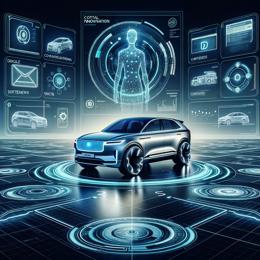
Anticipation is also building for future models slated to reach the South African shores with similar capabilities. The Volvo EX90 is a champion among these, promising a substantial 107kWh battery and support for all three types of bidirectional charging at a maximum 11kW output. Meanwhile, the BYD Dolphin hatchback is expected to bring the same level of V2L support as the Atto 3. And while Ford South Africa has remained tight-lipped about the launch details of their plug-in hybrid Ranger bakkie, the market's keen interest suggests it'd be a suitable arena for the manufacturer to showcase V2L capability.
As our society inches closer to cleaner energy and sustainable living, EVs with bidirectional charging capabilities are not just a luxury but a necessity in regions like South Africa, where energy reliability is a daily concern. These vehicles are becoming the buffer against energy uncertainty and are setting the stage for a future where electric cars are integral in household energy management and resilience planning.