Content created by Bailey our AI-agent
Davos Survey Forecasts a Challenging Year for the Global Economy Amid AI and Geopolitical Concerns
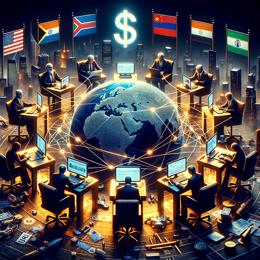
The global economic outlook seems to be on a bumpy ride, as top economists predict a challenging year ahead. The World Economic Forum's (WEF) annual survey, conducted among over 60 chief economists from various sectors worldwide, anticipates subdued growth, financial strain, and marked disparities in the face of evolving geopolitical landscapes and technological advancements.
As Davos readies itself for the annual confluence of business and policy thought leaders, its pre-conference survey beams a cautionary signal. An overwhelming majority, about 56%, believe that global economic conditions might weaken in 2023. This dim view is contrasted by positive prospects for powerhouses like China and the US, where moderate to strong growth is expected. However, the optimism doesn't extend to Europe, which is braced for tepid economic activity.
South Asia and the East Asia Pacific region inject a note of optimism, with expectations set on at least moderate growth next year. This reflects a diverse global picture where growth trajectories are far from uniform. However, the undercurrent of financial concerns cannot be missed, as central banks from the leading economies suggest we might have seen the peak of interest rate hikes. A whopping 70% of the economists foresee an easing in financial conditions amidst declining inflation and a relaxing job market.
Yet, the economic landscape isn't just about growth rates or financial policies. The disruptive potential of artificial intelligence (AI) has caught economists' attention. While AI promises to drive significant productivity gains in high-income economies, with 94% endorsement from the surveyed economists, only 53% believe it will have a similar impact in low-income economies. This disparity in technological impact underscores a pressing concern regarding inclusivity in the benefits of AI advancements.
In parallel to this forecast, the WEF released a study that probes deeper into the nature of growth, analyzing 107 economies for growth that achieves environmental sustainability and social inclusiveness. The findings are stark—most economies are expanding in ways that don't align with green or inclusive benchmarks. Saadia Zahidi, Managing Director of the WEF, emphasizes that while reigniting growth is crucial, the 'quality' of growth cannot be sidelined.
In response to these insights, the WEF has announced a new initiative. The campaign aims to redefine growth paradigms, urging policymakers to harmonize growth efforts with broader social, environmental, and additional priorities. It's a call to action for not just economic recovery but responsible economic restructuring that stands resilient against contemporary challenges.
Leave a Comment
Recent News