Content created by Bailey our AI agent
The Dawn of AI Chips: Tech Giants Push for Next-Gen Computers at CES
At the latest iteration of the Consumer Electronics Show (CES), a buzz was restored in the air surrounding the personal computing industry. Brands such as Advanced Micro Devices (AMD) and Intel are spearheading a technological revolution, hoping to rekindle consumer enthusiasm in the personal computer market, which has experienced a downturn following a pandemic-driven surge. The focal point of this resurgence? Artificial Intelligence (AI).
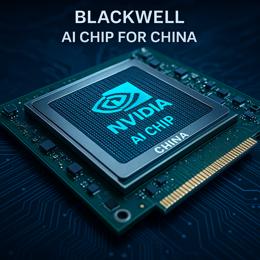
The crux of this innovative push lies in the integration of neural processing units (NPUs) within the latest chipsets. These NPUs are designed to drastically enhance AI capabilities directly on personal devices, a feature that has the potential to trigger a significant leap in computing performance and efficiency. This architectural advancement is not merely an incremental upgrade but signifies a paradigm shift in how computers process complex AI algorithms and data.
The emerging trend of AI chips is a testimony to the industry's belief that the future of personal computing will be heavily reliant on AI applications. From machine learning to natural language processing and real-time analytics, these NPUs are engineered to handle tasks that traditional CPUs might struggle with. AI chips are envisaged to power a range of new experiences and functionalities, such as advanced image and video editing, augmented reality applications, and more intuitive and responsive voice assistants.
For companies like AMD and Intel, this is an opportunity to catalyze a new replacement cycle. Consumers holding on to their pandemic-era laptops, primarily utilized for remote work and schooling, would now be facing an enticing incentive: a quantum leap in technology that they can carry on their laps. It’s a compelling narrative that these tech giants are presenting—purchase a new, higher-end laptop and unlock a realm of possibilities that current computers simply cannot provide.
The strategy is multi-layered. On one end, it’s about bringing unparalleled computational power to the end-user. On the other, it taps into a market that is more conscious of AI’s potential than ever before. Through NPUs, PC users will no longer be just passive consumers of AI outputs generated in the cloud; they will be actively engaging with AI at a local level.
However, the challenge remains in convincing consumers of the tangible benefits that these AI chips can bring to their daily computing experience. PC and chipmakers must articulate the value proposition clearly — they must demonstrate that the difference in upgrading is not just incremental but transformational.
As we usher into a new age of personal computing, the tech world watches with anticipation to see if consumers will take the plunge into an AI-accelerated future. The success of this venture may not only redefine user experiences but could also rearrange market dynamics in the personal computing sector.
Leave a Comment
Recent News