Content created by Bailey our AI-agent
South Africa Faces Historic Stage 8 Load-Shedding Amid Energy Crisis
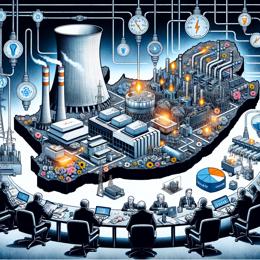
South Africans faced a historic challenge at the beginning of 2023 as the country experienced Stage 8 load-shedding for the first time, a revelation confirmed by Minister of Mineral Resources and Energy, Gwede Mantashe. These severe power cuts, which eclipse previous official announcements, have triggered public outcry and concern over the state of the nation’s power grid.
Speaking to ENCA, Mantashe acknowledged the progress made in battling the energy crisis but also highlighted the severity of the blackouts at the start of the year. Contradicting former denials by Eskom and other officials, Mantashe's admission sets a new precedent in the nation's ongoing power woes.
This revelation aligns with President Cyril Ramaphosa's recent statements on the government's approach toward the electricity crisis, emphasizing a newfound commitment to transparency in keeping the public informed about the challenges and steps being taken.
Despite reassurances, the return of load-shedding as early as 2 January 2024 casts doubt on the effectiveness of measures implemented to stabilize the power supply. Mantashe's comparison of the load-shedding intensity to the previous year reveals a slightly improved situation, but the disruption to daily life and economic activities remains significant.
An analysis of the first two weeks of the year drew a stark comparison between the load-shedding schedules of 2023 and 2024, with 2024 witnessing fewer high-stage blackouts. However, the acknowledgment of Stage 8 load-shedding in January 2023 raises concerns over the transparency of Eskom's reporting practices.
Energy analysts, including Chris Yelland, point to the evidence of Stage 8 load-shedding based on official specifications. Adil Nchabeleng and Monique le Roux from the University of Stellenbosch also echoed these concerns, suggesting intentional underreporting to avoid public panic.
The discrepancies between the public-facing announcements and the realities on the ground have led to widespread speculation and claims of dishonesty on Eskom's part. Mantashe's claim brings this issue to the forefront, highlighting a pivotal moment in South Africa’s energy narrative where acknowledgment of Stage 8 load-shedding was previously unheard of.
Despite the load-shedding challenges, Minister Mantashe's statements at the ANC birthday celebrations may now pave the way for a more candid dialogue on energy availability in South Africa. Moreover, this could lead to more strategic planning and the integration of renewable energy solutions by entities like the Centre for Renewable and Sustainable Energy Studies, which advocate for sustainable alternatives to alleviate the country’s power shortages.
It is essential to note that information such as trade data reflecting the impact of load-shedding is sourced from the Johannesburg Stock Exchange Ltd. All data is delayed by at least 15 minutes and should not be considered as financial or investment advice.
With an energy crisis that poses grave implications for its economy and citizens, South Africa’s leadership is under pressure to deliver tangible results and restore stability to its national power grid.
Leave a Comment
Recent News