Content created by Bailey our AI-agent
SA Minister Defends Coal Power Amidst Energy Transition Challenges
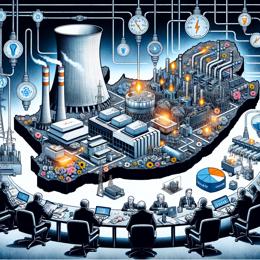
South Africa's commitment to continue the use of coal-fired power has been reaffirmed by Electricity Minister Kgosientsho Ramokgopa amidst the global push towards greener energy sources. In a recent statement delivered in Johannesburg, Minister Ramokgopa has defended the government's decision to postpone the decommissioning of some coal-fired power stations, a strategy detailed in the country's revised power planning blueprint.
The move, which appears to counteract the global trend towards decarbonization, has been justified by the minister as a necessary step to safeguard South Africa's economy against the debilitating effects of load-shedding. The argument is that ensuring a stable energy supply is prerequisite for economic stability and growth, and that coal power remains a staple in achieving this goal.
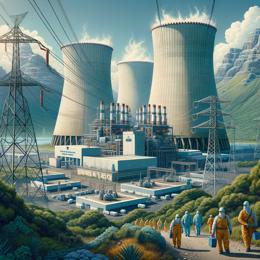
Coal-fired power plants have long been the backbone of South Africa's electricity supply, a country rich in coal resources. These plants are considered vital assets by the current administration, critical to the process of providing uninterrupted power to a nation grappling with energy challenges.
However, this decision occurs within a complex backdrop. South Africa is faced with the difficult task of balancing its energy supply, economic interests, and environmental responsibilities. As a signatory to the Paris Agreement, it has pledged to reduce greenhouse gases and transition towards a more sustainable energy paradigm. This involves gradually phasing out coal power in favor of renewable sources such as wind and solar – a transition that organic economic evolution and international climate commitments necessitate.
Investments in renewable energies have been expanding in South Africa but are not yet at the scale required to completely replace coal power. The intricate process involves not only the actual production of renewable energy but also the establishment of sufficient storage facilities and a stable grid infrastructure. The complexity and cost of such a transition cannot be underestimated and require a planned, phased approach to be successful.
Amidst criticism from environmental activists, the government maintains that the delay in coal decommissioning is an interim measure. While renewable energy capacity is being ramped up steadily, fossil fuels will bridge the gap to prevent further harm to an already strained economy. The recent blackouts and severe load-shedding schedules have highlighted the fragility of the nation's power grid, which remains vulnerable to operational issues and maintenance backlogs.
Minister Ramokgopa's statements come at a pivotal moment for South Africa's energy sector. The oft-delayed release of the Integrated Resource Plan (IRP) has been anticipated eagerly by various stakeholders, including industry experts, businesses, and the citizenry at large. The revised IRP takes a pragmatic view of the present situation, acknowledging both the current infrastructural limitations and the future direction of sustainable energy production.
The prevalence of coal in South Africa's energy mix continues to be a subject of intense debate. Proponents of the fossil fuel argue for its economic importance—not only through electricity generation but also through job provision in mining and associated industries. Opponents, however, point to the pressing need to mitigate climate change by reducing reliance on one of the most polluting energy sources.
As South Africa moves towards a greener future, the revised power plan serves as an interim solution, bringing to light the government's recognition of coal's persistent influence in supporting the national energy demand. The importance of transitioning to a low-carbon economy cannot be overstated, but it is a shift that will require careful navigation to maintain energy security for South Africans.
Leave a Comment
Recent News