Content created by Bailey our AI-agent
Eskom's Maintenance Woes: Expect Extended Load-shedding in South Africa
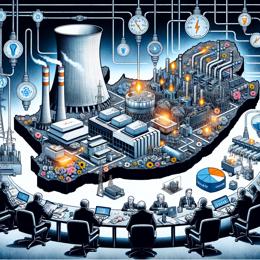
The energy outlook in South Africa remains bleak as load-shedding is anticipated to continue well into 2024, according to civil nuclear engineer Hugo Kruger. With Eskom, the country's primary electricity supplier, failing to conduct adequate maintenance on its power stations for over a decade, the nation is gripped by the reality of ongoing rotational blackouts.
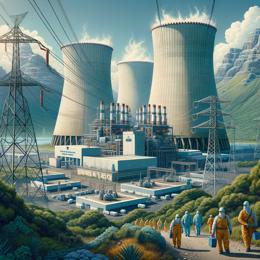
Kruger, a respected expert in the field, warns that South Africans should brace for an extended period of load-shedding, potentially throughout the first half of 2024. Eskom's inability to carry out the necessary comprehensive maintenance can be attributed to its insufficient reserve capacity. Proper maintenance standards require taking a power unit offline for extensive periods, ranging from half a year to an entire year. This measure, while crucial to the longevity and efficiency of the power stations, would inevitably lead to increased load-shedding due to reduced power availability during the maintenance period.
These insights followed the reintroduction of load-shedding on January 2, which disrupted an 18-day streak without rotational blackouts. Eskom's current intensified maintenance efforts, geared towards improving overall fleet performance, were met with the unexpected challenge of three generating units failing to come back online as anticipated. Additionally, the loss of six generating units coupled with the projected rise in electricity demand has exacerbated the situation.
The announcement made by the Electricity Minister in December 2023 predicted a period of opportunity maintenance during the festive season, with the expectation that there would be a decrease in demand. At the moment, approximately 8 GW of Eskom's fleet are under maintenance as opposed to the usual 5 GW. As industries resume operations after the holidays, the energy demand is expected to climb, putting more pressure on the already strained system.
Kruger highlighted the misconception surrounding South Africa's energy woes – the country does not suffer from a lack of generation capacity. The real issue lies in the absence of a reserve margin, which would allow the country to meet energy demands even under unforeseen circumstances. This lack of a safety net is the reason behind the country facing routine stage one, stage two, and stage four load shedding, a trend that Kruger believes will last at least into the middle of the current year.
One major concern that Kruger pointed out was the national failure to rehaul Eskom’s dated coal fleet, which forms the backbone of South Africa's energy supply. The maintenance conducted thus far has been described as superficial, with proper, in-depth maintenance being put off since the 2010 FIFA World Cup. Political hesitation, driven by the fear of introducing more load-shedding, has led to a cycle of delayed maintenance and mounting issues within the power fleet that impact consistent energy provision.
Daily Investor originally published this alarming analysis, and it is reproduced here with permission to enlighten the South African public on the depth of the energy crisis they face due to Eskom's challenge with effective power station maintenance.
Leave a Comment
Recent News