Content created by AI
Minister Blade Nzimande Entangled in Nsfas Funds Misuse Allegations and Kickback Scandal
South Africa’s Minister of Higher Education, Science and Innovation, Blade Nzimande, has been thrust into the spotlight and not for reasons pertaining to educational reforms or innovation. The seasoned politician finds himself at the center of serious allegations involving the misuse of National Student Financial Aid Scheme (Nsfas) funds and receiving illicit kickbacks from service providers tied to the scheme. These claims have led to the intensification of calls for his resignation as the investigations into the potential misuse of resources meant for facilitating student financial aid loom overhead.
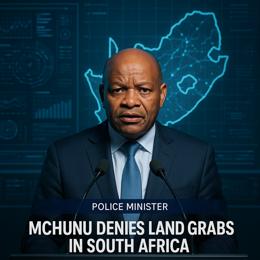
Minister Nzimande, who is also an influential member of the South African Communist Party (SACP), refuted the accusations laid against him with both vigor and vehemence, during a press conference held in Pretoria. His denial came on the heels of an explosive report by the Organisation Undoing Tax Abuse (Outa), which alleged that certain service providers, tasked with overseeing the Nsfas’ new direct payment system, had funneled millions of rand to Nzimande as kickbacks.
The gravity of the situation escalated when Nzimande’s involvement was reported to the Office of the Public Protector, leading to the potential institution of a criminal investigation to thoroughly examine the matter. This move adds administrative pressure to the minister, as the Public Protector has the constitutional mandate to uphold democracy and ensure public administration is conducted impartially and without prejudice.
The claims by Outa cast a shadow on the integrity of the Nsfas, which is a pivotal financial aid institution designed to empower lower-income youth in South Africa by facilitating their higher education. The possibility of funds being diverted for other purposes or individual enrichment is particularly troubling given the challenges many students face in financing their studies.
Residents and students alike have been vocal in expressing their discontent with these developments. The possibility of high-level corruption affecting educational resources strikes a chord with the public, who have historically put their trust in government instruments for enabling social mobility and academic advancement for all South Africans, regardless of socio-economic status.
The direct payment system was introduced as a measure to streamline and make the dispersal of funds to students more efficient. However, the allegations against Minister Nzimande suggest possible corruption and exploitation of this system, ostensibly contrasting with the intended purpose of the scheme and the expected conduct of a public official.
As the situation unfolds with the investigation by the Office of the Public Protector and the possibility of a criminal investigation, Minister Nzimande’s career is under extreme scrutiny. With his forthright denial of all allegations, the nation watches on to see whether the minister will come out unscathed or if the evidence will lead to more significant repercussions, including the escalating demands for his resignation.
As South Africans, education is seen as a fundamental right and pathway to better opportunities. These allegations unsettle the fundamental trust between the populace and those in positions of power. The public calls for accountability, transparency, and the swift and thorough investigation of these serious allegations to not only protect the integrity of educational funding but to also reinforce the notion that no individual is above reproach in a democratic society.
Leave a Comment
Recent News