Content created by AI
Eskom Recovery Plan Under Scrutiny Amid Load-Shedding Concerns
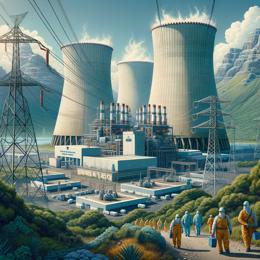
Eskom, South Africa's primary electricity public utility, faces critical scrutiny over its Generation Recovery Plan's effectiveness as rolling blackouts, known locally as load-shedding, resume after a period of stability. The National Rationalised Specifications Association of South Africa's (NRSA) chairman Vally Padayachee has voiced concerns that South Africans could experience load-shedding for the next two to three years, despite lower electricity demands after the holiday season maintenance.
The utility managed to supply uninterrupted power through December's peak demand times, skillfully handling around 32 gigawatts (GW) during the South African winter. This was an appreciable feat considering the average demand typically hovers at about 26 GW. The first week of January, typically characterized by reduced industrial activity and consequent lower demand, has surprisingly seen stages 2 and 3 load-shedding, despite demands lingering at a low of 23 GW.
The looming question that Padayachee raises is whether the recovery strategy employed by Eskom is adequate or in need of a significant overhaul. Eskom's planned maintenance during the festive season downtime involved about 8,000 megawatts (MW) of capacity. However, complications arose with three generating units failing to return online as expected, further aggravated by the loss of an additional six units and an anticipated demand spike.
Eskom's strategy of intensive maintenance is recognized as well-intended or "noble" by Padayachee, but he argues from historical precedent that proper planned maintenance necessitates a period of at least six months, rather than the executed six weeks. His concern is that hastened maintenance may incur risk and may not be thorough enough to ensure long-term sustainability of the coal-powered units.
The challenge Eskom faces is complex: undertake vital and long overdue maintenance of their coal-fired power plants, which ultimately means taking these units offline for extended periods—a move which would exacerbate current load-shedding—or to opt for lesser, more immediate maintenance approaches which could result in systemic inefficiencies and higher costs in the long run.
This situation places Eskom at a disadvantage, caught between maintaining immediate power supply and ensuring the longevity of its infrastructure. With reliability and performance issues at play, Eskom's current predicament necessitates an urgent and pragmatic reassessment of their recovery plan.
As the country continues to face the repercussions of energy interruptions on economic activities and daily living, the public's need for transparency from Eskom on their recovery roadmap and strategies for sustainable energy supply becomes more pressing. It's clear that continued load-shedding and power instability could mandate a reimagined energy policy for Eskom and South Africa's future.
Leave a Comment
Recent News