Content created by AI
Uncovering Mantashe's Role in the Delay of Eskom's ERA Bill and South Africa's Energy Crisis
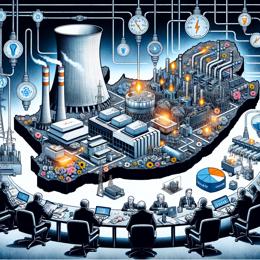
The much-anticipated Electricity Regulation Amendment (ERA) Bill, a piece of legislation critical to South Africa's energy sector, has suffered delays in parliamentary processing. This bill is central to the restructuring of the national power utility, Eskom, by separating its generation, transmission, and distribution divisions. Investigative insights from journalist Patrick McLaughlin have spotlighted the role of South Africa's Minister of Energy, Gwede Mantashe, in the apparent stalling of the bill's progress.
The impasse over the ERA Bill embodies the complexities and political maneuvering within the energy development plans of South Africa. It has raised deep-seated concerns regarding investor confidence, market stability, and strategic business planning in the country. The delayed legislative process is marred by ministerial conflicts – notably between Minister Mantashe and Minister of Public Enterprises, Pravin Gordhan – and further entangled by trade union interventions that voice fears over job losses in the event of privatization.
McLaughlin brings to light the prospective agenda of Minister Mantashe, who is seemingly preoccupied with reviving the gas industry, evidenced by engagements with Gazprombank about a LPG strategy for Mossgas. This hidden gas agenda seems to contradict the national priority of electricity reforms, leading to skepticism about Mantashe's commitment to the ERA Bill.
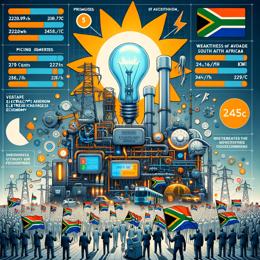
The emerging narrative suggests Mantashe's resistance to the bill aligns with broader trade union perspectives, namely COSATU, NUM, and SAFTU. These unions adamantly oppose the privatization of power generation, an element believed to be intrinsic to the unbundling of Eskom outlined in the ERA Bill. Kevin Mileham of the Democratic Alliance (DA) emphasizes that the unions' resistance is ideologically driven, as the bill's intent transcends Eskom and speaks to a more profound aspect of addressing energy poverty in South Africa.
The ERA Bill is seen as a pivotal driver for the transformation of the South African energy landscape. Advocates stress that it is not merely about privatization or climate change, but about fostering trust in public institutions and enabling an efficient and affordable energy system for the nation. Energy specialists and opposition MPs deduce a deliberate filibuster by Minister Mantashe – a stalling technique detrimental to the bill's passage.
With the upcoming 2024 elections, the fear is that the continuing delays will cascade into severe repercussions for businesses, investors, and the standard of living in South Africa. The required provincial mandates for a bill of such nationwide impact necessitate additional time for thorough consideration, suggesting that potential approval may extend well past the election period. The appointment of a new Eskom CEO coincides with this legislative inertia, bringing into question the level of strategic preparation and awareness regarding these governmental obstructions.
In summary, the ERA Bill's stagnation is symptomatic of a larger bureaucratic battle and vested interests within South Africa's energy sector. It encapsulates the complexities of political inertia and the urgent need for decisive action to secure an energy-stable future for the country.
Leave a Comment
Recent News