Content created by AI
The End of an Era: Eskom's Displacement by Private Sector Renewable Energy Investments
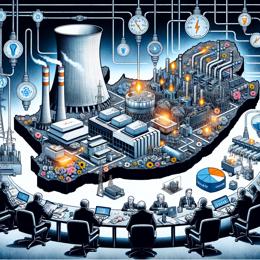
The South African energy landscape is poised for a monumental shift as the private sector muscles into the industry with an unprecedented focus on renewable energy, signaling a potential decline for the long-standing national utility provider, Eskom. This transition, underscored by the insights of former Eskom CEO Andre de Ruyter, suggests the national utility could be relegated to servicing only the financially disadvantaged segment of the market.
De Ruyter's remarks on the Business Day Spotlight podcast paint a picture of the energy sector's imminent transformation. The former CEO highlighted the significant impact of the government's decision to loosen restrictions on private generation capacity, which resulted in a flood of investments in renewable energy solutions.
The ex-chief executive estimated that a staggering 66,000 megawatts (MW) worth of renewable energy projects initiated by private entities are currently in development. This figure is about a quarter bigger than Eskom's entire capacity and serves as a telling omen for the direction of South Africa's energy industry. According to de Ruyter, the move away from Eskom is happening as corporations seek out more stable and sustainable energy sources amidst persistent load-shedding woes.
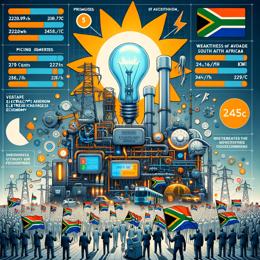
The shift is being driven by both residential and corporate sectors, as rooftop solar installations become increasingly commonplace. The surge is not a mere trend but a profound change in the nation's power production narrative, illustrated by the impressive 4,400+ MW already produced via rooftop solar installations outside of government procurement and projections indicating a 420% increase in the coming years.
This pivot towards independent power generation underlines the transformative potential of deregulation in the electricity sector. As private companies respond to the allure of self-reliance and the desire to circumvent the disruptions caused by load-shedding, a paradigm shift ensues.
RMB chief economist Isaah Mhlanga's data supports de Ruyter’s claims. Citing the current trajectory, Mhlanga envisions a steady decline in load-shedding’s impact on the economy, becoming negligible by 2025 as alternative energy production surges. The private sector's anticipated contribution of over 25,000 MW to the grid between 2023 and 2030 is expected to mitigate power shortages and potentially downscale load-shedding to a more manageable stage 3 by mid-2025.
This expansion of independent energy generation signifies more than just a blow to Eskom; it represents a decisive step towards a more resilient, decentralized electricity supply in South Africa. Admittedly, this transformation is not without its challenges – the social and economic implications for communities dependent on coal for livelihood are profound and require navigational policies that engender a Just Energy Transition.
Highlighting a crucial perspective on Eskom's role amidst this transition, de Ruyter insists on the necessity for a proactive stance. It is clear that the utility, and by extension the country, must embrace the tangible opportunities arising from the renewable energy sector to actively guide the nation towards a greener, more sustainable future.
In conclusion, the narrative spun by the former Eskom CEO brings to light the urgent need for strategic frameworks, investor-friendly policies, and social safety nets to manage the impending shift in South Africa's energy production and consumption. Without such measured and forward-thinking approaches, Eskom's relegation might be more than a hypothetical scenario—it could be an imminent reality.
Leave a Comment
Recent News