Content created by AI
South Africa's Energy Debate: Gearing Up for a Nuclear Future or an Alternative Path?
South Africa stands at a crossroads of crisis and opportunity as the nation grapples with its worst electricity shortages on record and debates the merits of nuclear energy as a sustainable solution. DA Shadow Minister of Mineral Resources and Energy Kevin Mileham has come under scrutiny by "Simon the Sowetan," who dissects Mileham's recent article outlining the DA’s position on why nuclear energy may not be South Africa's silver bullet at this juncture.
South Africa's electricity crisis has far-reaching consequences, affecting not just the economy but every facet of daily life—from businesses suffering shutdowns, students relegated to studying in darkness, to critical services like hospitals and police stations being left without reliable power. The severity of the situation cannot be understated, with 2023 becoming a record year for load shedding, eclipsing the combined total of the previous eight years.
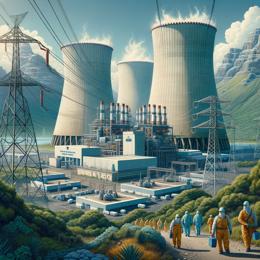
While some advocate for a nuclear new build, citing advancements like Japan’s quick turnaround on its Kashiwazaki-Kariwa plant, opposition voices point to the numerous challenges, including extended timelines, cost overruns, and the current government's poor track record with large infrastructure projects, as evidenced by the likes of Medupi and Kusile. These challenges, including the skepticism surrounding Small Modular Reactors (SMRs) and the stumbling progress at Koeberg's life extension project, paint a picture of nuclear energy as a vision fraught with complications and lengthy timelines rather than an immediate remedy.
The economics further complicate the nuclear argument. South Africa’s high debt-to-GDP ratio, combined with the significant capital expenditure required for a new nuclear build estimated at $11.25 billion, not accounting for additional financing costs, corruption, or delays, reveals another layer of the fraught nuclear proposition.
Amidst this debate, renewable energy sources demonstrate substantial contributions to the grid, challenging assertions that renewables are marginal players in South Africa's energy mix. The Renewable Energy Independent Power Producers Procurement Programme (REIPPPP), despite past hindrances, holds potential to alleviate some of the load shedding woes—if allowed to progress without interruption.
As criticism and counterarguments are levied against nuclear prospects, a more diversified, quicker, and more pragmatic approach to the current energy crisis is suggested. Incentivizing rooftop solar, accelerating independent power procurement, and addressing transmission infrastructure issues all represent areas of potential for immediate action. Ironically, it's this blend of measures, rather than a single-track pursuit of large-scale nuclear or renewable projects, that could usher in the expediency and adaptability needed to restore stability to South Africa's beleaguered electricity supply.
Leave a Comment
Recent News