Content created by AI
South Africa’s Education System: Progress and Pitfalls Post-Apartheid
Three decades into South Africa’s democracy, the nation continues to grapple with the legacy of apartheid, particularly within its educational institutions. The transformation of the education system, a process of undoing decades of racial and ethnic discrimination enshrined in policies like Bantu education and Christian national education, has been a journey of endurance and resilience.
At the onset of democracy, South Africa’s ruling party faced the monumental task of overhauling an education system that fundamentally served to fortify racial segregation and inequality. The legacy: a crippled infrastructure and a dearth of resources that predominantly affected black children in rural and township areas. Enshrined in the Constitution is the promise of the right to a basic education – a right that remains only partially fulfilled.
Education ministers through the years have each shouldered the responsibility of propelling the system towards equality. The first minister in post-apartheid South Africa, Sibusiso Bengu, inherited a disarrayed system. Though there was an increase in the number of students sitting for senior certificate examinations under Bengu’s watch, actual matric exemption passes decreased, and infrastructure remained poor. His successor, Kader Asmal, tackled the system with reforms including outcomes-based education, though its sustainability was questioned.
Naledi Pandor’s tenure saw initiatives targeting literacy, numeracy, and teacher remuneration. She also emphasized the crucial importance of early childhood development. Despite these efforts, studies revealed South African pupils lagging significantly behind in literacy and numeracy at an international level.
Under the current minister, Angie Motshekga, the matric pass rate has impressively risen. However, significant systemic issues plague the departments of basic and higher education – dilapidated school buildings, the lack of basic amenities, unqualified teachers in classrooms, and the persistence of outdated, dangerous infrastructure such as pit latrines and asbestos roofing.
The dual challenge of improving education quality while extending its reach continues to baffle policymakers. While Motshekga's proposed Basic Education Laws Amendment Bill aims to make education more accessible and holds governing bodies accountable, it has not been without its detractors.
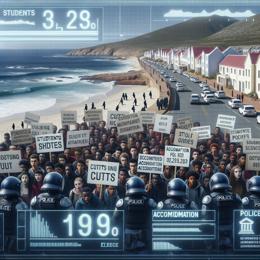
In the realm of higher education, Blade Nzimande's tenure was marred by the #Feesmustfall protests, calling attention to the financial inaccessibility of tertiary education. While Nzimande’s approach initially attracted criticism, the establishment of a hybrid system through the National Student Financial Aid Scheme (NSFAS) demonstrates a marked stride towards making higher education accessible to disenfranchised groups – a significant feather in the department’s cap.
Despite the progress made, the Department of Education receives an overall grade of D in terms of adequately serving the nation's learners. The challenges are numerous and complex, and whether or not the department can fulfill its constitutional mandate remains an open question.
The journey of educational transformation in South Africa is indicative of the nation’s broader struggle to reconcile its apartheid past with the promises of its democratic future. It’s a reminder that the intersection of policy, implementation, and the lived realities of South Africans is a complex and often fraught space.
Leave a Comment
Recent News