Content created by AI
Rebuilding South Africa Requires Visionary Leadership and National Unity: A Call by Nonkululeko Gobodo
In a poignant comparison with the remarkable socioeconomic transformations of South Korea and Singapore, Nonkululeko Gobodo highlights an essential lesson for South Africa: the imperative need for visionary leadership and a collective push for national reform. Reflecting on the last thirty years, it is starkly apparent that while these Asian nations have substantially reduced poverty and inequality, South Africa has fallen short of such progress. The reason, as Gobodo identifies, is a lack of the strategic and forward-looking leadership that spurred change elsewhere.
The leadership of South Korea and Singapore post-colonial rule opted for a vision far different from South Africa's; their mantra was one of building rather than indulgence. They fostered a national ethos centered on discipline, law, and entrepreneurship. On the other hand, South Africa's "time to eat" philosophy has unfortunately nurtured a culture of dependency and anticipation of entitlement, with citizens expecting solutions to be handed to them, consequently stunting the country’s economic and social growth.
Yet what's more concerning is the approach towards empowerment programs such as broad-based Black Economic Empowerment (BEE). Rather than nurturing a generation of industrious entrepreneurs, the country has given rise to 'tenderpreneurs' — individuals who capitalize on government contracts without contributing to sustainable business growth. This realization beckons a fundamental shift in national vision from consumption to construction, akin to the transformational policies seen in South Korea and Singapore.
Additionally, Gobodo identifies the unique challenge of post-colonial racial wounds that South Africa grapples with, which neither South Korea nor Singapore experienced in the same measure. The legacy of apartheid continues to cast a long shadow over the nation, with racial tension and division still palpable. The key to surmounting this lies in normalizing race relations and fostering unity across all demographics. This entails confronting history with the intention of healing rather than harboring a perpetual stance of victimhood or defensiveness.
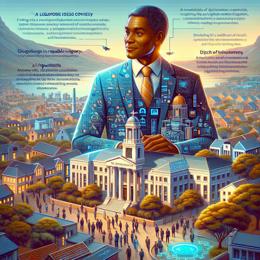
This journey toward national reconciliation started with initiatives like the dialogue on race held on November 23 at the University of Witwatersrand, showing a readiness among South Africans to tackle these deep-seated issues. Gobodo's "Awakened Global" initiative and partnership with the Wits Centre for Diversity Studies has sparked critical conversations that can pave the way forward towards a united national identity.
Gobodo's movement, founded on the ethos of advocating for true liberation from prejudice, particularly for black people and women, finds resonance in today's South Africa. With an acknowledgment of past failings and a clear-eyed vision of the future, the country can indeed forge a path of transformation. The change must be championed by leaders who emanate from both black and white communities, beholden to provide the missing vision and leadership required for rebuilding.
The task ahead is monumental but not insurmountable. Indeed, anything can rebuild after destruction — a principle as applicable to nation-states as it is to personal lives. Such an awakening calls for a revised vision and, fundamentally, a new form of patriotism that transcends mere words and manifests in action. As South Africans, the time is ripe for collective responsibility, stepping beyond the blame game, and crafting a future defined by inclusivity and opportunity for all.
#GOOGLE_AD