Content created by AI
Tragic Misidentification: Israeli Hostage Deaths and Escalating Violence in Gaza
In a tragic turn of events, three Israeli hostages who had been missing in Gaza were inadvertently shot and killed by Israel Defense Forces (IDF) soldiers despite their desperate pleas for rescue. Yotam Haim, 28, Samer Talalka, 22, and Alon Shamriz, 26, who were mistakenly identified as terrorists, had cleverly employed leftover food to compose distress signs, a poignant testament to their hope for deliverance.
The Israel Defense Forces divulged that the men had sought temporary refuge in a building adjacent to where the fatal incident occurred, signaling they had survived in that location for an undetermined duration. Yet, this demonstration of resourcefulness ended in tragedy on Friday in the Shejaiya neighborhood of Gaza City due to a dire miscommunication.
According to an IDF representative, the young men had exited the building shirtless, one of them brandishing a white flag fashioned from a stick and cloth, when a soldier perceived a threat from the group. After being at a considerable distance, the soldier prematurely declared them hostile and initiated the fateful shooting.
This occurrence constitutes a serious deviation from standard rules of engagement, with Israeli officials recognizing the misstep. The repercussions of the incident have compounded the already intense pressure on Israel to strike a bargained agreement to ensure the release of more hostages. With around 120 individuals presumed to be still held captive by Hamas and aligned Palestinian factions, the stakes for the safe return of these hostages are exceedingly high.
A most somber revelation emerged on Sunday when the IDF revealed that an inspection of the premises where the hostages had been writing their desperate messages for assistance. A somber "Help, 3 hostages" was inscribed beside "SOS," signaling the extremity of their ordeal.
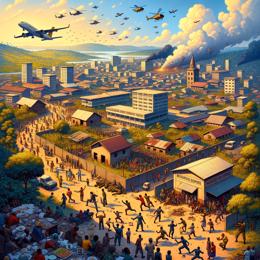
As the area withstands the onslaught of Israel's extensive retaliatory operation, aimed at dismantling Hamas capabilities, civilians bear the unbearable brunt. The vast campaign has, according to Palestinian health authorities, resulted in more than 18,000 deaths and countless others displaced from their homes. Jabalia refugee camp is one such site of despair where, as reported by the Hamas-run Gaza health ministry, Israeli air strikes have claimed at least 90 lives—an account yet to be independently corroborated by the BBC or other organizations.
International outcry has become louder, with France's Foreign Minister Catherine Colonna visiting Israel, fervently advocating for an "immediate and durable truce." Israel, however, through its Foreign Minister Eli Cohen, renounced the idea of a ceasefire, categorizing it as a concession to Hamas. Similarly, both the UK and Germany have expressed their support for a "sustainable ceasefire," albeit without calling for immediate action.
The debate for the cessation of hostilities unfurls alongside the alarming humanitarian crisis unfolding on the ground in Gaza. Deprivations in crucial supplies underscore the urgency of the situation, and images circulating on social media bring to light the desperation of the local populace left to clamber on aid trucks.
Meanwhile, fresh IDF disclosures paint a picture of Hamas's operational capacity with the identification of what is described as their most sophisticated tunnel yet. Remarkably large and situated perilously close to the Erez border crossing with Israel, this discovery underscores the multifaceted challenges of the conflict at hand.
Leave a Comment
Recent News