Content created by AI
Rethinking East Africa's Nuclear Energy Ambitions Amid Financial and Geopolitical Risks
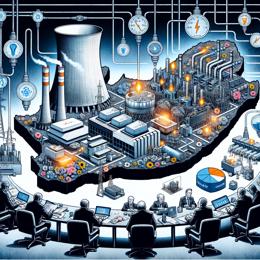
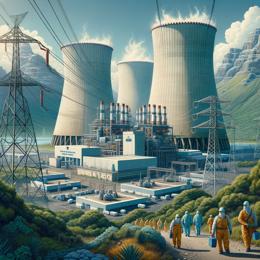
The race to meet the soaring electricity demands of East Africa's fast-growing population and economy is leading several nations towards nuclear energy—a direction that entails substantial risks amidst the allure of technological advancement. Uganda's intention to construct a 2,000-megawatt nuclear plant, alongside Rwanda, Kenya, and Tanzania's nuclear aspirations, signals a shift to diversify energy portfolios. However, the financial and geopolitical setbacks associated with nuclear power call for a critical reassessment.
The driving force behind this nuclear pivot is clear. The shift from under-developed to developed status often correlates with mastering nuclear technology—interpreted as a symbol of a nation's advance onto the world stage. A single nuclear reactor, after all, could potentially double a country's electricity output. But beneath this vision lies an intricate tapestry of challenges and questions of viability.
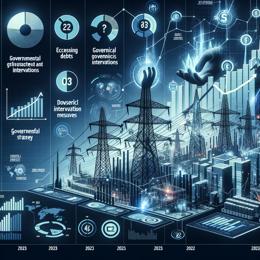
From a financial perspective, East African countries face a steep climb. The cost of constructing nuclear plants, often escalating beyond initial estimates, coupled with extended construction timelines and ongoing maintenance and security measures, position nuclear energy as one of the costliest options available. For Uganda, financing a 2,000MW plant may equate to an entire year of the nation's total tax revenue. The dependency on external loans—with their interest penalties—exacerbates the economic gamble.
Geopolitically, the involvement of foreign nations like China and South Korea is notable, but it is Russia's aggressive campaign to cement itself as a leading international nuclear plant developer that raises red flags. With 18 African cooperation agreements as of 2019, and several more since, Russia's influence raises concerns about political and economic dependence. The Russian offers of low-interest financing may appear attractive, yet they bind recipient nations to long-term commitments amid a backdrop of Russia's own tumultuous political landscape, further highlighted by the Ukraine war.
The alternatives to nuclear power in East Africa are not only viable; they are increasingly attractive. Renewable resources such as medium-scale solar, wind, and geothermal power are becoming economic front runners. When compared to nuclear or hydro megaprojects, their lower construction costs and shorter timeframes for deployment make them compelling options. Countries like Kenya are pioneering the way with geothermal energy, while potential for solar and wind power has barely been tapped.
Critically, opting for these renewable technologies provides energy security without the burden of protracted dependency on external nation-states, nor does it subject the region to the financial stranglehold of debt-driven nuclear projects. Geothermal energy, for instance, harnesses the Rift Valley's natural volcanic heat, while the abundant sunlight and suitable landmass present a golden opportunity for solar power domination.
Investing in the large-scale, expensive, and uncertain nuclear industry may prove a misstep for East African nations. As the region stands at an energy crossroads, the path forward may lie in harnessing the abundant, clean, and cost-effective energy sources that its unique geography affords. As global trends move towards decarbonization and sustainable development, East Africa has the chance to leapfrog the nuclear phase and establish itself as a leader in renewable energy.
Leave a Comment
Recent News