Content created by AI
Eskom's Future Hangs on Tariff Reforms, Warns Former CEO Andre de Ruyter
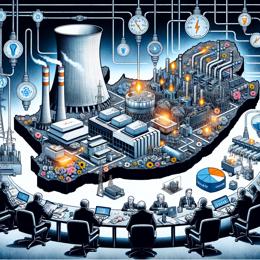
In a frank conversation with Business Day Spotlight, former CEO of Eskom, Andre de Ruyter, openly highlighted the ongoing challenges the power utility faces and outlined the critical steps needed to ensure its financial sustainability. A significant part of this challenge revolves around the structure of electricity tariffs.
As De Ruyter indicates, Eskom, which is the main provider of electricity in South Africa, is at a crossroads. Despite receiving a substantial R254 billion debt relief package from the government, the specter of financial instability remains. The utility, which is burdened with over R400 billion of debt, is struggling under the weight of operational inefficiencies, ageing infrastructure, and the ever-increasing cost of maintaining its coal-fired power stations, many of which are beyond their life expectancy.
The fresh perspective of De Ruyter stipulates that the bailout, while a necessity in the short term, will not suffice to mend Eskom's deep-seated issues. He emphasized the critical need for the new CEO, Dan Marokane, to navigate Eskom towards a structure where tariffs truly reflect the costs of generating electricity. This change is not merely a financial maneuver; it's a cornerstone reform that could steer Eskom towards a self-sustaining future.
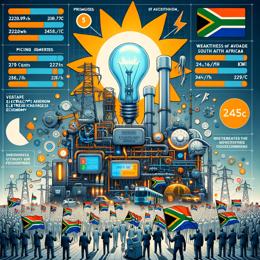
A cost-reflective tariff model would likely ensure that Eskom can finance its operational and capital expenditure without the need for ongoing government support. However, obtaining approval for such tariffs from the National Energy Regulator of South Africa (Nersa) is a contentious issue. Historically, Eskom has struggled to secure approval for tariff increases in line with its requested amounts, leaving the utility in a precarious position where expenses surpass revenue – a situation that is untenable in the long term.
During his tenure, De Ruyter himself vociferously advocated for cost-reflective tariffs, considering them as essential for Eskom's turnaround strategy. According to his predictions, without these necessary reforms, Eskom would once again find itself seeking aid from the national fiscus within the next three to four years, a scenario that would place additional strain on South Africa's already stretched public resources.
This pressing issue calls for decisive and strategic action by the newly appointed CEO and the entity's management to engage with all stakeholders, including the government, Nersa, and the public, to pave the way for a sustainable tariff structure. It also speaks to the broader reformation needed within South Africa's energy sector, advocating for transparency, efficiency, and most critically, the financial viability that can be fostered through a revised tariff approach.
For the general public and the economy, the implications of De Ruyter's statements are far-reaching. Reliable and affordable electricity is a pillar of economic growth, and Eskom's stability is directly tied to the country's prosperity. The task ahead is formidable, but the former CEO's message provides a clear direction - reform the tariff structure or face recurrent financial crises.
Moreover, the full interview with De Ruyter hosted by Business Day editor Alexander Parker shed further light on these remarks, emphasizing their gravity and urgency. It can be accessed through the Business Day Spotlight, a TimesLIVE Production, offering in-depth insight into these critical issues.
#GOOGLE_AD
Leave a Comment
Recent News