Content created by AI
E. coli in eThekwini: A Deep Dive into Durban's Water Crisis and the Path to Cleaner Shores
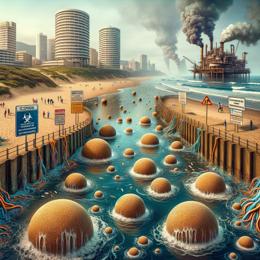
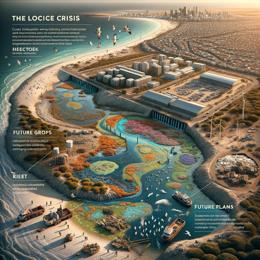
Durban's beaches, once the pride of South Africa's KwaZulu-Natal province, are now marred with concern following reports of heightened E. coli levels. The culprits: failing sewage systems and pollution-pumped rivers. The call to action sounds louder than ever as both the public and experts seek greater transparency and remedial action.
Ryan Edwards, a principal environmental scientist and wetland ecologist, is on the frontlines of this environmental quandary. His analysis paints a stark picture – the issue is far-reaching, extending way beyond the sandy banks to the entire water and sewage infrastructure of eThekwini.
E. coli – the fecal bacteria now notorious in Durban – is a key indicator of water quality. Its prevalence suggests significant amounts of fecal matter in water bodies, pointing to broader systemic issues. Edwards's work, focused on river ecosystems, involves rigorous testing through sophisticated probes and partnerships with accredited organizations like Talbot Laboratories.
Following the 2022 floods, many rivers in the Durban area, including the Umgeni and Umhlatuzana, became viral E. coli vectors, the implications of which have been devastating for marine biodiversity, public health, and local tourism.
Reports by the City's Water and Sanitation Department uncovered persistently high E. coli counts, primarily in rivers and subsequently in the ocean, exacerbated by heavy rainfall. Denial and deflection have been the municipality's defensive posture, according to Edwards, albeit the situation demands urgent intervention.
The collapsing sewerage network is a product of neglect and mismanagement, coupled with factors such as ineffective wastewater treatment facilities, compromised sewage pumps, and improper waste disposal. Post-flood damage to pump stations has exacerbated the scenario, enabling the flow of untreated sewage directly into rivers and oceans.
Water treatment facilities, according to Edwards, are designed considering gravitational pull, hence their proximity to rivers. When these plants falter, as witnessed after the floods, raw sewage skips essential processing, polluting watercourses.
Janet Simpkins, the founder of Adopt-a-River, reiterates Edwards's concerns, pointing to malfunctioning wastewater treatment works and dilapidated infrastructure as the E. coli surge's prime drivers. These failures introduce pathogens that pose severe health risks beyond E. coli.
Collaborative efforts like Adopt-a-River's ongoing tests in river and ocean sites remain crucial to monitoring and mitigation strategies. Yet, remedying this environmental crisis is a shared responsibility, Edwards argues. Illegal dumping by businesses and construction malpractices are factors equally to blame.
Cleaning rivers and beaches depends on a fully operational sewage network and stronger management of waste and pollution. For measurable progress, the call for specificity in public information offerings is echoed by advocates for clean water. Initiatives like ‘Woz Olwandle’ – a website indicating water safety levels at beaches – prove valuable communication tools in this collective challenge.
With Minister Senzo Mchunu's upcoming event on water and sanitation issues, hope flickers on the horizon for Durban's impacted shores, yet the road to recovery remains complex and multi-layered.
Leave a Comment
Recent News