Content created by AI
South Africa's Energy Crisis: A Year of "Madness" and the Quest for Light in the Dark
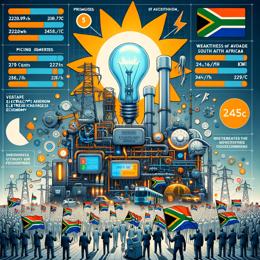
As South Africans prepare to bid farewell to 2023, a year marked by persistent electrical load-shedding, the nation reflects on a tumultuous period in its energy sector. Tinged with scandal, high-profile exits, and a resounding call for action, the past 12 months have further entrenched the country's power woes into everyday life, prompting critical governmental changes, public outcry, and international intervention.
The resignation of Eskom's CEO, André de Ruyter, in late 2022 set the stage for what would be a chaotic year. Following his departure were incidents of violence and controversy, including retributive actions directed toward De Ruyter himself, Eskom's board, and government officials. The coal sector in Mpumalanga even became embroiled in an unsavory narrative while De Ruyter turned to penning a revealing account of his time at the helm of South Africa's electricity public utility.
With the nation subjected to relentless Stage 6 load-shedding, President Cyril Ramaphosa appointed Kgosientsho Ramokgopa as the inaugural electricity minister in a bid to extinguish the persistent outages. The president's declaration of a national state of disaster on electricity underscored both the gravity of the situation and the urgency for a cohesive national response.
Despite an early end to the state of disaster in April, Eskom broke its own dismal record by May, plunging the country into darkness for a staggering 334 days by the year's end. The closure of the Kusile Power Station spun into a contentious debate, exposing deeper issues within afflicted communities facing poverty and joblessness.
As Eskom's executives pursued opportunities abroad, South Africa found itself mired in both a practical and ethical quandary. The Brics summit in South Africa became the platform for China's contribution of emergency power equipment, a donation that, ironically, sparked controversy over both its sufficiency and the undermining of domestic manufacturers.
Moreover, the Pretoria High Court's ruling against load-shedding initiatives underscored the conflict between Eskom's limitations and the constitutional rights of South Africans, with educational, healthcare, and law enforcement services troublingly ensnared.
Dan Marokane's appointment as Eskom CEO in December, almost a year after his predecessor stepped down, symbolizes both the cautious optimism and the bureaucratic inertia characterizing the utility's governance. The nation now holds its collective breath in anticipation of the updated Integrated Resource Plan, which is predicted to energize the conversation with plans for nuclear procurement and the heightened potential of reaching a 65% Energy Availability Factor (EAF) by March 2024.
While the year was indisputably marred by instability and what Mashele calls "madness," it has arguably set the stage for a pivotal period of transformation in South Africa's energy sector. Reforms, robust maintenance strategies, and increasing EAF percentages point toward gradual improvement. And with the unwavering human spirit epitomized by the words of Thomas Sankara, there remains a glimmer of hope that the madness of yesterday can indeed be the progenitor of tomorrow's clarity and brightness.
Leave a Comment
Recent News