Content created by AI
Pope Francis Advocates for Ethical Framework in AI Use Through International Treaty
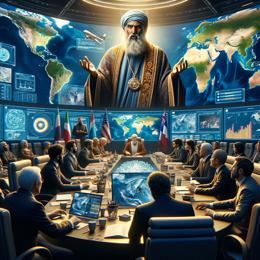
In an age where artificial intelligence (AI) permeates all corners of society, Pope Francis has called upon world leaders to seriously consider the implementation of a global treaty to oversee the ethical use and development of AI technologies. This bold proposition was made in a thoughtful six-page message released in anticipation of the World Day of Peace, highlighting AI as a pivotal focus of this year's theme.
Pope Francis, the spiritual leader of over 1.2 billion Catholics worldwide, has historically expressed his views on modern issues, emphasizing the importance of universal ethics and human development. Within his recent address, the pontiff delved into the potential pitfalls and moral quandaries that burgeoning AI technologies bring forth.
The 86-year-old leader reflected on the astounding progress in science and technology that has significantly eased human suffering. However, Francis emphasized caution, pointing out that AI has the capacity to centralize immense power, thus presenting risks that range from the dissemination of fake news to intricacies in making significant decisions affecting millions of lives, like social security allocations or military targeting choices.
Francis expressed his concerns regarding the autonomy of AI and the consequential 'technological dictatorship' that may ensue if left unregulated. He profoundly noted that those who create and control such algorithms cannot be presumed altruistic or responsible by default. Instead, a collective and globally coherent approach is required – a binding international treaty to regulate AI's development and use was his suggested safeguard.
The pope's message arrives during a time when AI systems have become alarmingly sophisticated. The emergence of models like ChatGPT has presented a very realistic depiction of the capabilities modern AI holds and has simultaneously stoked widespread debate regarding their implications.
Around the world, governments have begun to recognize the urgency of this issue. The European Union is crafting comprehensive regulations for the burgeoning sector, following China's legislative efforts specifically aimed at governing generative AI. Moreover, US President Joe Biden recently signed off an executive order emphasizing AI safety standards, signaling national-level awareness and intervention.
The moral implications of AI misuse even touched Pope Francis on a personal note when AI-generated imagery portraying him in a rather unorthodox fashion circulated the internet. This highlighted the ease with which AI can influence perception and reinforce the need for stringent governance over the tools that can alter realities so convincingly.
Pope Francis's call to action isn't just about preventing AI from serving as a weapon of disinformation or a tool of oppression; it's about reshaping the trajectory of technological evolution in a manner that consistently enhances the quality of life for all individuals, unlike disparities proliferated by unchecked innovations. As AI technologies advance, the pope's vision of a regulated, equitable, and ethically bound future remains clear, even as the digital horizon grows ever more complex and intertwined with daily life.
Leave a Comment
Recent News