Content created by AI
E. coli Concerns for Durban Beaches Raise Alarms Amid Tourism Season
E. coli levels at Durban's beaches have become the center of public health concerns following heavy rains that have swept through the region. The eThekwini Municipality, in collaboration with the Institute for Water and Wastewater Technology (IWWT) at the Durban University of Technology, claims that most of the city’s beaches maintain "excellent" or "acceptable" water quality, presenting a complex scenario for beachgoers and the tourism sector.
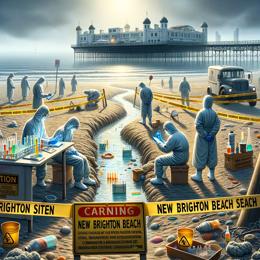
Recent findings have shown a discrepancy in water quality assessments; results released on Monday from joint testing with Talbot indicated that six popular beaches presented exceedingly high E. coli counts. These sites—Ushaka, Point Beach, South Beach, North Beach, Battery Beach, and Country Club Beach—were consequently closed to the public. This outcome is worrying since these spots are traditionally regarded as prime beach destinations within the city. The assessment, based on December 7th testing, was in stark contrast to the municipality's defense of water quality.
However, just a day later, there was a remarkable turnaround as the city declared the water at various beaches safe, following tests conducted on December 11th. The municipality stated that improvements are notable and most water tests align with the standards for recreational use. Moreover, they emphasized that the locations that evidenced high levels of E. coli are not normally used for recreational purposes, hence downplaying the impact on tourism and recreational activities.
Presently, 11 beaches remain closed, including those previously tested with Talbot. Nonetheless, city spokesperson Gugu Sisilana appeared to deflect concerns regarding tourism, insisting that alternative attractions, like the Valley of 1000 Hills and township tourism, will sustain visitor interest despite the beach closures.
Sisilana’s response seemingly shifts blame onto the natural occurrence of rain for the high levels of E. coli, rather than on potential issues with the city infrastructure. This rationale is supported by the assertion that rain reduces beach attendance naturally, further minimizing the perceived impact on tourism.
This issue comes at a time when Durban has also been stripped of its prestigious Blue Flag beach status, suggesting a broader concern for the coastal city's water safety and management. While alternative destinations within the KZN region, such as Marina, Trafalgar, Southport, Umzumbe, and Hibberdene beaches operated by Ray Nkonyeni Municipality, have earned full Blue Flag status, this does not detract from the scrutiny on Durban's management of its natural assets.
Ongoing testing and monitoring are crucial for the local authorities, as further adjustments to the available beaches for public use may evolve with the dynamic situation. As testing continues, the number of swimmable beaches may potentially rise, a sentiment noted by the spokesperson.
The eThekwini Municipality's present challenge lies in effectively communicating risks and safety information to the public while mitigating any potential damage to the city's tourism industry. Ensuring the safety of beachgoers and restoring the public's trust are immediate priorities, especially during the peak season for recreational beach use.
Leave a Comment
Recent News