Content created by AI
Alleged Favoritism and Potential Risks in SA's Russian-Backed Energy Deals Scrutinized by the DA
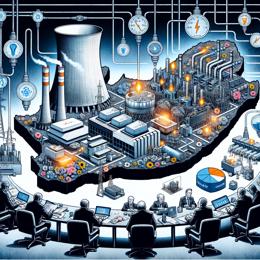
In an unprecedented move, South Africa's energy landscape may be undergoing a significant shift with recently announced Russian-backed deals. The Democratic Alliance (DA), led by Shadow Minister of Mineral Resources and Energy Kevin Mileham, is raising red flags over what could potentially be a repeat of the costly and controversial Kusile and Medupi energy contracts, but this time with a Russian twist.
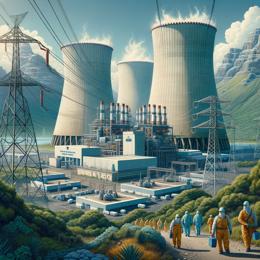
In an in-depth conversation with BizNews editor Alec Hogg, Mileham unpacked concerns surrounding two major developments. Firstly, the appointment of Gazprom Bank, a Russian financier, to oversee a $200 million refurbishment of the Mossgas plant. Secondly, the proposition of a 2,500-megawatt nuclear power plant, which echoes past controversial nuclear efforts attempted under former President Jacob Zuma's tenure.
To fully understand the implications and reasoning behind these decisions, a Promotion of Access to Information Act (PAIA) request was lodged by Mileham, which would force the government to disclose decision-making documents, bid criteria, scoring, and other pertinent information. The DA’s aim is to ensure due diligence and prevent what appears to be a preselection process that could once again lead to economically disastrous outcomes.
What is particularly intriguing is the manner in which Gazprom Bank was deemed the sole qualifying bidder for the refinery’s refurbishment project. From 20 potential bidders, 19 were disqualified, leading one to consider the likelihood of bid criteria manipulation to favour the Russian bank. This move has potential ramifications that extend beyond energy, potentially exposing South Africa to secondary sanctions that could jeopardize crucial economic relationships, such as the one under the American Growth and Opportunities Act (AGOA).
The concern escalates with the prospect of Gazprom supplying the feedstock for the refinery, implicating long supply lines and heightened costs. There's also speculation that this engagement might be a prelude, setting the stage for a larger, looming nuclear deal, drawing attention to Russia's historical penchant for securing such contracts in Africa.
It is alarming to note that the pressing need for energy — considering South Africa's ongoing electricity crisis — may be met with solutions that have extended timelines and dubious affordability. While nuclear power may be a component of the national energy mix per the Integrated Resource Plan (IRP), the decision-making that predicates this supply solution is questionable, lacking transparency, and with probable political undertones.
The DA also fears the potential for opaque dealings, drawing parallels with the past where the ANC's hands were allegedly in the cookie jar, as seen with the Hitachi saga where corrupt payouts linked to energy projects lined political pockets. Through the PAIA request, the DA aims to peel back the layers of decision-making, hoping to unearth any skeletons that could hint at similar corrupt structures.
Amidst these convoluted layers of potential corruption and favoritism lies a critical call for change— change that presses for a government capable of robust scrutiny, transparency, and accountability. In the face of historical justifications and political manoeuvering, the upcoming election may catalyze such desired transformations in governance and oversight.
#GOOGLE_AD
Leave a Comment
Recent News