Content created by AI
South Africa Greenlights Gazprombank's $200M Investment in Mossel Bay Refinery Revamp
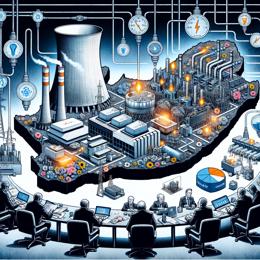
In a pivotal development for South Africa's energy sector, Gazprombank, the Russian state-owned entity, has secured approval from the South African government to embark on a massive $200 million revamp of the Mossel Bay gas-to-fuel refinery. The endorsement came from President Cyril Ramaphosa's cabinet following a recommendation by the national oil and gas group, PetroSA, to collaborate with the bank.
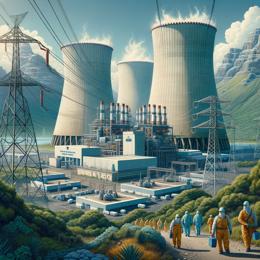
The Mossel Bay refinery has remained dormant since 2020 due to an inadequate gas supply, significantly contributing to South Africa's energy crisis, crippling its industries, and forcing a reliance on costly energy imports. The refurbishment project could be a game-changer for the nation, with Gazprombank not only providing necessary capital but also gaining a stake in the profits once the refinery becomes operational.
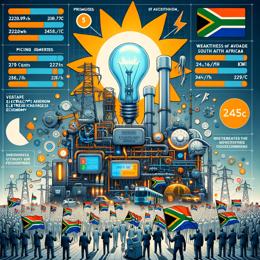
This decision comes at a time when Eskom, the country's state-owned power company, struggles under the weight of management lapses and sustained rolling blackouts, throwing South Africa’s energy stability and economic growth into uncertainty. Like Eskom, PetroSA is recuperating from financial setbacks and requires substantial investment to turn the tide.
While the proposition of tapping into Russian funds might appear to be a silver bullet for South Africa's energy needs, it is not without potential geopolitical ramifications. Gazprombank itself has been a target of US sanctions prompted by the Russian invasion of Ukraine. Nevertheless, the bank retains access to the SWIFT payment system, sustaining its international trading capabilities in energy and agriculture.
There is domestic skepticism, however, as the main opposition party, the Democratic Alliance, warns of an increased risk of international sanctions that might follow this partnership. Despite these concerns, South Africa is pursuing opportunities to secure future energy supplies, including potential offshore gas fields discovered by TotalEnergies.
The infusion by Gazprombank indicates South Africa's broader strategy to elevate its stature in the global energy sphere and to secure a more self-reliant energy network. It also signifies a persistent search for international partnerships in state-owned PetroSA's financial recovery plan. This endorsement by the South African government reveals a readiness to forge ahead with unconventional alliances in the face of critical infrastructure needs.
As the nation grapples with Eskom's instability, this ambitious project promises not only to revitalize an essential piece of energy infrastructure but also raises significant questions about the sustainability and governance of such strategic partnerships. The resulting landscape following the completion of the refinery project could potentially alleviate some of South Africa's most pressing energy and economic challenges—or, conversely, it might draw South Africa into more complex geopolitical controversies.
Leave a Comment
Recent News