Content created by AI
South African Government Grapples with Constitutional Breach over Load Shedding Crisis
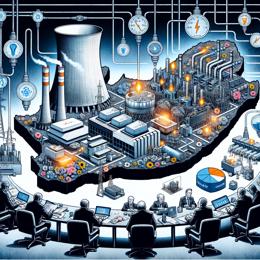
The South African government is currently facing a profound challenge in the energy sector following a recent High Court ruling from the Gauteng High Court in Pretoria. The court has unequivocally stated that the widespread practice of load shedding in the country, essentially rolling blackouts implemented to prevent the collapse of the power grid, represents a violation of citizens' Constitutional rights.
The presiding judge's verdict pointed out that a series of avoidable failures on the part of the government contributed to the current situation. Consequently, the government has been given a strict deadline to ensure that, by the end of January next year, public schools, hospitals, and police stations have a "sufficient supply or generation of electricity to prevent any interruption of supply as a result of load shedding."
Electricity Minister Kgosientsho Ramokgopa has acknowledged the court's findings but has sought legal counsel to address the practicality and implications of meeting this obligation within the stipulated time frame. This development places the government in a precarious position, with the need to fast-track solutions that ensure the continuation of essential services without interruption from load shedding practices.
The urgency of resolving the energy crisis becomes even clearer as the impact of load shedding on the economy and the well-being of South African citizens takes its toll. The need for reliable power is fundamental to the operation of crucial services such as healthcare and law enforcement. Ensuring consistent electricity supply to these essential services is not only a matter of upholding the rights as enshrined in the Constitution but also of maintaining public trust in the government's ability to provide for its people's basic needs.
The minister's search for advice reflects the complexities involved in addressing the power supply issues. Beyond the legal implications, the government must confront the logistical and financial challenges of bolstering the energy infrastructure within a very tight schedule. This includes enhancing the capacity of the state-owned power utility, Eskom, mitigating the risk of future load shedding, and exploring alternative energy sources to meet national demand.
The South African public awaits concrete plans and actions from the government, hoping for a resolution that can lead to sustainable energy reliability. The gravity of the High Court's decision is clear – it is a call to action to the government to not only respect but also protect the citizens' Constitutional rights through adequate power provision.
Leave a Comment
Recent News