Content created by AI
South Africa Sets Course for Energy Future with New Electricity Blueprint
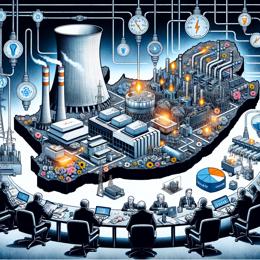
In a pivotal move towards a sustainable and secure energy future, the South African government has endorsed a significant electricity blueprint, envisaged to shape the development of the country's electricity provision for the next few decades. Electricity Minister Kgosientsho Ramokgopa, in an online briefing, relayed the Cabinet's affirmation of the updated Integrated Resource Plan (IRP).
This strategic plan delineates the government's approach to ameliorating the nation's profound energy crisis. While the precise release date for public comment is yet to be disclosed by the Department of Mineral Resources and Energy, this announcement signals a landmark step in South Africa's energy landscape.
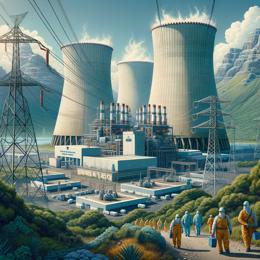
The comprehensive document encompasses two distinct phases: a near-term plan up to 2030 and a long-term vision extending to 2050. The initial phase is laser-focused on addressing the immediate energy deficit which has placed a strain on Africa's most-industrialized economy, while also acknowledging the possibility of reevaluating the timeline for decommissioning older power plants to soothe the current outages.
Specifically, the ruling African National Congress, in the previous month, endorsed proposals by Ramokgopa to defer the shelving of Eskom's coal-powered facilities which were on track for closure. This represents a tactical approach aimed at mitigating unprecedented electricity blackouts that have critically impaired economic growth.
Transitioning to the second phase of the IRP, the plan emphasizes the integration of renewable energy sources. The government recognizes the pivotal role these cleaner energy forms will play, coupled with the essential requirement to upgrade and ensure the readiness of transmission infrastructure to handle the anticipated changes.
In an era where climate change is at the forefront of global discourse, South Africa's Presidential Climate Commission, earlier in May, had advocated for the IRP review for the years 2010-2030 to encompass a bold 50 to 60 gigawatts of renewable energy capacity by the decade's end. This aligns with a growing international momentum towards reduced reliance on fossil fuels and a shift towards diverse and sustainable energy mixes.
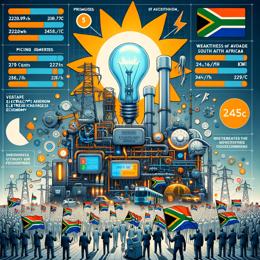
As South Africa stands ready to usher in a new era of energy policy shaped by this groundbreaking blueprint, it is important that stakeholders and the public engage with the forthcoming IRP details. The nation’s journey to a reliable, efficient, and clean energy future is on the horizon, and the IRP provides a foundation that could steer South Africa towards energy autonomy and a lower-carbon economy.
#GOOGLE_AD
Leave a Comment
Recent News