Content created by AI
James Webb Telescope Reveals Stunning Detail of Shattered Star Cassiopeia A
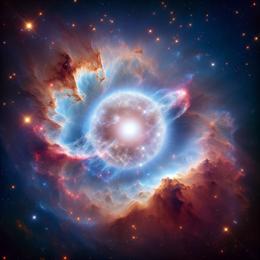
In an extraordinary display of celestial history, NASA's James Webb Telescope has beamed back new, high-resolution images of Cassiopeia A, the remnants of a supernova explosion that have captivated astronomers and stargazers alike. Deemed one of the brightest radio objects in the night sky, Cassiopeia A is an astronomical wonder approximately 11,000 light-years from Earth, believed to have exploded nearly 340 years ago as observed from our planet.
The latest pictures were achieved by harnessing the unparalleled capabilities of the telescope's Near Infrared Camera (NIRCam) instrument. They demonstrate the intricate cascade of material that was ejected during the cataclysmic event, revealing a dance between the ejected debris and the preceding exhalations of the once massive star.
Leading the research team, astrophysicist Danny Milisavljevic expressed his awe at the level of detail captured. He described the debris field as consisting of "filaments akin to tiny shards of glass", providing crucial data that offers revolutionary insight into the star's final moments.
What sets these NIRCam images apart from earlier captures is the sharpness and clarity they bring to celestial observations. The James Webb Telescope had previously examined Cassiopeia A using its Mid-Infrared Instrument (MIRI), which produced a more colour-intensive image due to its focus on mid-infrared wavelengths. These earlier images illuminated features such as the warm dust encircling the star remnant.
However, the NIRCam's prowess at near-infrared wavelengths presents the astronomical community with a sharper and more detailed view, revealing aspects of the supernova remnant that had remained elusive until now. This comparative analysis, using different wavelengths to uncover layers of cosmic detail, represents a significant leap in our understanding of stellar life cycles and the violent universe we inhabit.
The James Webb Space Telescope continues to advance human knowledge by acting as a time machine peering into our universe's past events, providing substantial fuel for research into stellar explosions, black hole formation, and the cosmic distribution of elements essential for life. Astronomers and space enthusiasts eagerly anticipate further discoveries as the telescope explores the furthest reaches of space and time.
Leave a Comment
Recent News