Content created by AI
Critical Maintenance at Koeberg Nuclear Plant Pivotal for South Africa's Energy Security
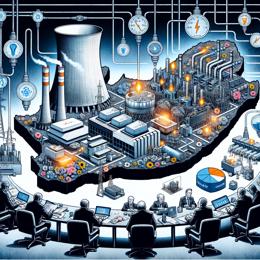
In a significant move to secure the energy future of South Africa, Eskom has announced plans to take Unit 2 of the Koeberg nuclear reactor offline for essential maintenance work. This step, initiated on December 11, 2023, is a crucial juncture for Eskom, as the work is necessary to extend the operating licence of the country’s sole nuclear power plant.
Electricity Minister Kgosientsho Ramokgopa has indicated that lessons learned from previous maintenance on Unit 1, which experienced delays in its return to service, have prompted an emphasis on efficiency. The aim is to complete the replacement work on Unit 2's steam generators more rapidly than before, avoiding past missteps.
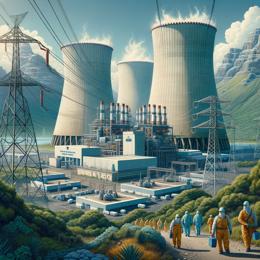
Koeberg, located near Cape Town, stands as a linchpin in the nation’s power supply, with its two reactors theoretically capable of contributing over 1,800MW when running concurrently. However, the plant has not operated at this capacity for some time. Presently, with one reactor almost fully operational again after delays, and another about to be taken out of service, the strain on South Africa's power grid remains at a critical point.
Eskom's task is compounded by the impending deadlines set forth by the National Nuclear Regulator (NNR), which mandates a stringent testing schedule following the maintenance work. Cracking in the reactors’ concrete containment structures is a growing concern—one that the NNR aims to address through scheduled 200-day outages for each unit. These measures are in place to ensure that the integrity and safety of the plant are uncompromised.
Peter Bester, the programme manager for nuclear power stations at the NNR, has conveyed that for several more years, it will be rare to have both units operable simultaneously. This reality puts additional pressure on Eskom to meet the July 2024 deadline to complete the current replacement project and maintain operations within one reactor at least.
Chris Yelland, managing director at EE Business Intelligence, has voiced concerns about potential pitfalls that may emerge. He cautions that further delays in the ongoing work could heighten the risk of a simultaneous shutdown of both units—a scenario that would greatly exacerbate the country’s energy challenges.
This moment is a crossroads for Eskom and South Africa's energy resilience. How Eskom handles this operation could shape the nation's power landscape for years to come. Koeberg remains a critical asset, but proactive management and a focus on timely execution of maintenance activities are essential to its continued contribution to the national grid.
Leave a Comment
Recent News