Content created by AI
Surge in Private Power Generation as South Africa Moves Away from Eskom
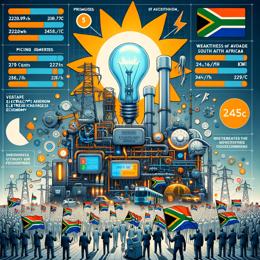
South Africa is witnessing a burgeoning rise in private power generation, as businesses and individuals grow weary of the persistent energy supply challenges posed by the state-run electricity company, Eskom. Within the span of three months up to September, a staggering 98 power-generation facilities have been registered by the National Energy Regulator of South Africa (Nersa), signifying an unprecedented surge in the diversification of the country's energy matrix.
The rush to establish alternative power sources outside of Eskom's grid is indicative of a strategic pivot aimed at circumventing the utility's frequent load shedding schedules, a consequence of breakdowns in its predominantly coal-fired plants. With a combined capacity of 908 megawatts (MW) and an investment value of R17.3 billion, these new registrations reflect a resolute commitment among South Africans to secure a more reliable and sustainable energy future.
Solar technology shines at the forefront of this energy revolution, accounting for 71% of the newly registered capacity. South Africa's abundant sunlight and the adaptability of solar installations—ranging from rooftop panels to extensive solar farms—have made it a preferred choice among renewable energy options. The appeal of solar energy is also in line with global trends towards cleaner, greener sources of power.
These latest developments bear witness to the efficacy of government reforms aimed at facilitating private sector participation in electricity generation. Historically, power projects exceeding 1 MW required licensing, which, until 2021, posed a significant barrier to entry. A pivotal policy shift occurred when the government raised the project size threshold exempt from licensing to 100 MW, before entirely removing this cap in 2022, albeit keeping in place station registration protocols.
Since 2018, Nersa's records reveal a total of 1,185 generation facilities registered, cumulatively representing 5,785 MW of capacity and commitments worth R111 billion. This impressive tally underscores a broader societal impetus to address the energy shortfall gripping the nation.
While government programs aimed at bolstering the grid have faced delays due to bureaucratic and logistical hurdles, there has been some movement forward. Just recently, a major step was accomplished with the completion of a tender process for South Africa's first battery energy storage system. This tender attracted international attention with noteworthy winners including global energy giants Electricite de France and Scatec ASA.
As South Africa continues down the path of energy diversification, the story here is not just about moving away from an inefficient state-owned enterprise, but also about embracing the potential of renewable resources to empower a sustainable and independent energy future. With private initiatives picking up the pace to meet the country's demand, what we are observing is a pivotal shift in the dynamics of South African energy production—one that is increasingly driven by the private sector's agility and innovation.
Private power generation is not just a stopgap measure for Eskom's shortcomings; it represents a transformative trend that is reshaping the landscape of national energy security. As these projects contribute to a more stable and abundant electricity supply, they also pave the way for a cleaner, greener, and more resilient energy ecosystem for generations to come.
Leave a Comment
Recent News