Content created by AI
AMD Launches MI300 AI Accelerator Chips to Challenge Nvidia's Dominance
Advanced Micro Devices Inc. (AMD) has escalated the competition in the artificial intelligence (AI) semiconductor market with its latest release, the MI300 accelerator chips. Designed to outpace the offerings of market leader Nvidia Corp., AMD's launch represents a strategic move to capture share in a market forecasted to reach over $400 billion within four years. This ambitious growth projection has more than doubled from AMD's previous estimate, reflecting the rapidly evolving landscape of AI hardware demand.
Introduced during a highly-anticipated event in San Jose, California, the MI300 lineup marks a crucial moment in AMD's fifty-year history. It establishes a direct competition with Nvidia, which has until now enjoyed a soaring valuation surpassing $1.1 trillion, fueled by its uncontested leadership in the AI accelerator domain.
The significance of AI accelerator chips lies in their specialized capability to efficiently manage the data-intensive processes of developing AI models, traditionally a bottleneck for conventional CPUs. This technology is drawing us closer to the creation of AI systems with human-like intelligence, a milestone Lisa Su, CEO of AMD, considers imminent yet still nascent in terms of deployment.
AMD's confidence in the superiority of its MI300 series is bolstered by its adoption among the titans of the tech industry. Companies like Microsoft Corp., Oracle Corp., and Meta Platforms Inc. have been announced as early customers, signaling a potential shift in the tides of technological investment. This endorsement was reflected in the 2.3% dip in Nvidia's shares, although AMD's stock did not proportionally benefit amidst a generally bearish day for tech stocks.
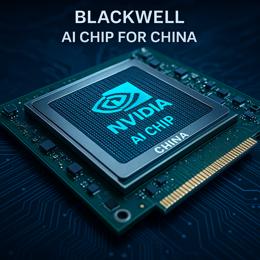
One of AMD's key competitive advantages is the chip's specifications. The MI300 AI chip is equipped with over 150 billion transistors and delivers substantially more memory and memory bandwidth than Nvidia's incumbent H100 chip. According to Su, while matching Nvidia's H100 in AI software training capacity, the MI300 exceptionally excels at inference tasks, which apply trained AI models to real-world situations.
Despite AMD's assertive foray into this sector, it remains aware that the battle will not be solely with Nvidia. As the AI landscape heats up, numerous competitors will join the fray, and Nvidia is not standing still—it plans to launch the H200 next year, featuring even faster memory technologies, and a completely new architecture is anticipated later in the year.
This bustling activity in the AI processor segment underlines the unwavering optimism surrounding AI's potential. To put the forecasted market size into perspective, the entire chip industry in 2022 stood at $597 billion, according to IDC. In contrast, AI processors alone are projected to capture a substantial fraction of this total in the near future.
While AMD eyes significant gains from its accelerator business, expected to exceed $2 billion by 2024, reaching a sizeable market share will be a gradual process. The company anticipates its total sales to be around $26.5 billion, with the new AI chips contributing a growing but modest portion initially.
The MI300 series is based on graphics processing units (GPUs), which have transcended their origins in video gaming applications to become the core of AI software training due to their parallel processing prowess. As AMD steps into the AI spotlight, the industry prepares for a dynamic evolution, marked by continuous innovation and heightened competition.
Leave a Comment
Recent News