Content created by AI
South African Studies Reveal Deadly Toll of Air Pollution from Eskom and Sasol
In an eye-opening revelation, South Africa grapples with the profound impact of industrial air pollution on human health. Two critical studies, commissioned by the South African government and conducted by the University of KwaZulu-Natal and the Council for Scientific and Industrial Research, expose the severe consequences of emissions from major corporations such as Eskom and Sasol.
Completed in 2016 and 2019, these studies delved into the air quality of South Africa’s pivotal industrial zones. Despite the government’s implementation of emission limits, the research indicates that such measures are markedly inadequate. In the face of surging pollution levels and associated health risks, the government's decision to not widely publicize these findings has sparked controversy, given its ongoing legal battles over pollution and the dilemma of enforcing laws that could intensify energy shortages.
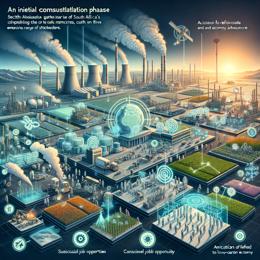
The Highveld Priority Area and Vaal Triangle Air-shed Priority Area were the primary regions in focus of the studies, both in close proximity to Johannesburg and Pretoria. The data points to the dire health implications of emissions from Eskom’s coal-fired power plants, Sasol's petrochemical facilities, an ArcelorMittal SA steel mill, and even the byproducts of domestic coal usage.
Even though both Eskom and Sasol admit to the negative impacts their emissions have on health, they have taken steps to mitigate these effects with various postponements to meet upcoming, stricter limits set for 2025. Despite the admission and the countermeasures proposed, these studies suggest such efforts may be insufficient.
Researchers involved in the Highveld study have urged for a more meticulous investigation and review of the existing air quality standards, believing that "adverse health outcomes do occur even below the pollutant standards." They advocate for a more stringent approach in addressing air pollution to protect community health.
The Environmental Department of South Africa responded to these findings, stating that the Vaal Triangle study was indeed published and disseminated to stakeholders. Still, this dissemination appears to be limited to printed copies, with no substantial efforts made to reach a broader audience. The Highveld Priority Area study, while remaining unpublished, did feature in court litigation brought forward by environmental activists.
These studies come at a time when South Africa's lax emission standards face scrutiny. Compared to countries like China and India, South African regulations permit citizens to be exposed to pollutant levels far exceeding recommendations by the World Health Organization. Experts like Jamie Kelly, an air quality analyst, believe that in valuing the health of children and adults, South Africa should implement stricter air pollution standards.
Furthermore, the research highlights the heightened vulnerability of children in these polluted areas, showing increased susceptibility to allergens, inflamed respiratory tracts, and higher instances of asthma and other diseases. Tragically, an infographic from the Highveld study associates the emission of particulate matter with 4,881 premature deaths each year.
With areas like Sharpeville and Embalenhle identified as heavily impacted by pollution from nearby industrial operations, the government claims to be taking steps well beyond merely tightening emission limits to address these alarming levels of pollution. Nonetheless, the environment department has held back from confirming a direct link between individual deaths and air pollution, emphasizing the importance of mitigating particulate matter and other pollutants to prevent further health ramifications.
The studies involved household surveys and examining the lung functions of children in primary schools, underscoring the reality of pollution's grip on South African communities. With heavy industrial activities contributing to perilous heart diseases, strokes, and birth defects, the path towards cleaner air is fraught with pressing health, environmental, and legal challenges.
Leave a Comment
Recent News