Content created by AI
Alarm Bells Ring Over Koeberg Nuclear Plant's Safety Amid Crisis Management and Secrecy
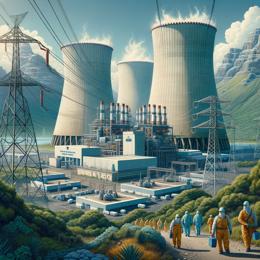
The Koeberg Nuclear Power Station, situated on the Western Cape of South Africa, is teetering on the brink of what could be an environmental and humanitarian crisis. Eskom's ambition to extend the operational life of Koeberg's reactors by an additional 20 years is marred by severe delays, safety oversights, and a burgeoning culture of secrecy that may cost not only the province but also the nation dearly if not judiciously addressed.
Recent findings raise questions regarding the adequacy of the plant's safety measures as it operates perilously close to regulatory deadlines. The International Atomic Energy Agency (IAEA) has pinpointed 15 grave areas of concern following their inspection of the facility. Notable among these is the deteriorating condition of Koeberg's containment structures, which exhibit alarming signs of cracking concrete, large-scale delamination, and rebar corrosion—vestiges of environmental conditions and delayed maintenance that have been lingering since 2000.
The integrity of the containment vessels is critical to preventing the release of radioactive materials into the environment in the event of an accident. Yet, a malfunctioning containment vessel monitoring system undermines this safety net. The last comprehensive leak tests on these structures took place in 2015, with the next evaluations scheduled precariously close to—or even beyond—licence expiry deadlines.
Koeberg’s challenges do not stop at the containment vessels. The plant’s electrical infrastructure is flagged for not meeting IAEA safety standards, with issues including wetted cables, inadequate illumination in cable corridors, and overloaded cable trays that could result in a communication blackout to the control room during a plant emergency.
Eskom’s response to these issues appears lackluster at best, with actions such as the replacement of critical components of the containment monitoring system and the validation of cables not being pursued with the urgency that the situation demands. Moreover, the disappearance of seasoned professionals, including the departure of chief nuclear officer Riedewaan Bakardien, only deepens the predicament as the plant hemorrhages institutional knowledge and experience.
The most unsettling aspect of this unfolding narrative is the veil that has been cast over critical safety information, evidenced by the heavily redacted Safety Case for Long-Term Operation of Koeberg Nuclear Power Station report. It shields the plant's strategy for mitigating potential nuclear accidents from public scrutiny, undermining the community’s trust and safety.
Revelations such as the alarming incident wherein a worker mistakenly targeted a safety valve for maintenance only aggravate fears over operational safety and the culture within the plant. This culture, which seems to prioritize expedience over safety, has led to questionable decisions, such as letting crucial software subscriptions lapse, thereby blinding the plant management to component obsolency.
The current state of affairs suggests that a stringent and transparent re-evaluation of Koeberg’s readiness for a long-term operation is not just prudent but urgently necessary. Koeberg and Eskom need to embrace transparency, allowing for public and professional scrutiny that could help mitigate the potential for catastrophic failure.
Time is of the essence, and the IAEA must be granted the opportunity to conduct a comprehensive and unhindered investigation into Koeberg’s safety protocols and structural integrity. Between the impending financial strains, the risk of load-shedding, and the enormous stakes of nuclear safety, the South African government and Eskom are treading on thin ice that may not support them much longer.
In conclusion, Eskom's ambitious plans to extend Koeberg’s operational life cannot come at the expense of safety and transparency. Koeberg is not just a keystone in South Africa's energy infrastructure; it is a potential hazard that requires the utmost attention, expertise, and care. To not act with this in mind would be to invite disaster.
Leave a Comment
Recent News