Content created by AI
UK Government Raises Salary Threshold for Foreign Workers amid Migration Cut Plans
The United Kingdom has announced a significant increase in the minimum salary threshold for foreign skilled workers' visas, part of a broader initiative by Prime Minister Rishi Sunak’s government to reduce net migration. This contentious decision pushes the salary requirement from £26,200 to £38,700, an increase of almost a third, and comes at a time when the UK is grappling with record-high levels of migration, as well as a tight labour market exacerbated by Brexit-induced changes to the freedom of movement.
Interior Minister James Cleverly outlined the government's intentions to the Parliament, highlighting the necessity for immediate and robust action. According to Cleverly, reforms would include amendments to the shortage occupation list where certain exceptions apply, and tightening of family migration rules concerning workers bringing dependents.
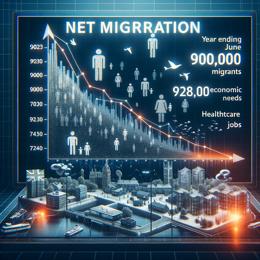
In 2022, the UK saw net migration soar to a record 745,000, prompting various sectors to express concerns over the increased pressures on public services and infrastructure. The Conservative Party, significantly influenced by such sentiments, has historically pledged to reduce net migration figures, eyeing a target of under 100,000. In light of a looming national election, Cleverly's announcement may also serve to ease tensions and criticism within the party regarding the government's migration policies.
Despite these objectives, the policy could ignite fresh disputes with the business community. Entrepreneurs and companies across sectors like engineering, construction, and catering that have leaned on international employees encapsulate the concerns. These industries already face acute workforce shortages and might experience further strain under the new visa regulations.
The government’s migration reduction strategy doesn't solely target economic migration. The Sunak administration has also vowed to address irregular migration, particularly the influx of individuals crossing the English Channel in small boats.
With Brexit campaigners having promised greater border control post-EU exit, many citizens who voted 'leave' did so with the hopes of reduced migration numbers. However, in the years following, the UK opened new visa channels for Ukrainian citizens fleeing conflict, and for those from Hong Kong amid political upheaval. The migration policies, thus, have been a balancing act between controlling numbers and responding to international humanitarian crises.
The ONS figures depict an intricate pattern, with the majority of the 2022 immigration numbers accounted for by non-EU nationals. Meanwhile, special visa arrangements contributed significantly to these numbers, including arrivals from Ukraine and Hong Kong.
The streamlined immigration policies showcase a dual effort to address domestic electoral concerns and uphold the UK’s international commitments. Nonetheless, their execution still garners concern considering Britain’s current socio-economic landscape. Implementation is set to begin in spring, but the implications for the UK’s labour force composition and the economy at large remain to be seen as the business sector braces for impact.
Leave a Comment
Recent News