Content created by AI
The Controversy of Elephants in Zoos: Ethical Dilemmas and Conservation Challenges
The role of zoos in modern society is increasingly contested, especially when it comes to the captivity of large, sentient creatures such as elephants. Zoos, once the bastions of family entertainment and animal exhibits, are facing a decline in public interest for animal performances and exploitation. Despite this trend, places like the Pretoria Zoo are adapting by hosting public parties and after-dark festivities, a move that could be seen as searching for new ways to stay relevant and profitable in modern times.
Organizations like Animal Asia point out that although zoo administrators justify elephant captivity under the guise of conservation, this rationale may not hold water, particularly in South Africa where elephant populations in natural habitats are already large. This underscores an ongoing ethical debate about the value and consequences of keeping elephants in confined spaces for the stated purpose of conservation when their natural conditions could be vastly improved in the wild.
Historically, zoo designs have attempted to provide more naturalistic settings. The Hagenbeck revolution in the early 1900s introduced enclosures without bars, using moats and landscaped elements to hide confinement. This evolution continued with the work of David Hancocks who envisioned a gorilla exhibit rich with natural foliage. Nonetheless, Hancocks later critiqued modern zoos for failing to meet the authentic needs of the animals they house, suggesting that often "natural-looking" exhibits are anything but natural for the living creatures they showcase.
Modern zoos claim education as one of their primary goals, yet unbiased studies suggest that this claim is problematic. For example, research carried out after visits to London Zoo indicated that the majority of children showed no significant increase in knowledge about animals or conservation. Furthermore, the World Association of Zoos and Aquariums, of which Pretoria Zoo is a member through PAAZA, emphasizes biodiversity conservation research, a noble goal that, however, often fails to transition from the theoretical realm to practical application, particularly regarding the reintroduction of captive-bred animals into the wild.
Research has shown that breeding programs such as Species Survival Plans rarely lead to the successful release of captive animals back into their natural environments. Captivity-induced ailments, as observed in the case of Charlie the Elephant at the Pretoria Zoo, highlight the physical and psychological issues faced by elephants in zoos – problems not typically found in their wild counterparts. These include obesity, arthritis, foot problems, and reproductive disorders, culminating in a generally shortened lifespan.
The paper "Mind and Movement: Meeting the Interests of Elephants" by Dr. Joyce Poole and Petter Granli underlines the stark difference between the needs of elephants in the wild versus those held in confinement. These issues form part of a broader discussion on the utility and morality of captivity for conservation purposes.
Consequently, the once-prevalent Noah's Ark paradigm of species preservation is now giving way to integrated approaches that emphasize connection with in-situ projects, focus on local species, and facilitate the exchange of animals among zoos and between zoos and wildlife, particularly favoring smaller species less impacted by captivity.
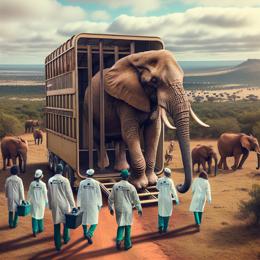
Organizations like the Pro Elephant Network (PREN) are responding to the challenges of elephant captivity by advocating for the release of captive elephants back into the wild or, where not possible, seeking the most ethical and natural conditions for their ongoing care. Such ethical considerations must weigh the costs of animal welfare against the potential benefits of species conservation – a balance that continues to challenge proponents and opponents of modern zoological institutions alike.
Leave a Comment
Recent News