Content created by AI
South Africa's Waning Global Influence, Assertions from Sygnia CEO Magda Wierzycka
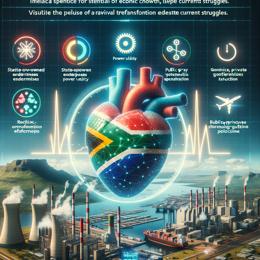
In a statement that echoed the concerns of stakeholders both locally and internationally, Magda Wierzycka, the chief executive officer (CEO) of Sygnia, a prominent financial services group in South Africa, has made stark observations about the country's dwindling significance on the global stage. During the announcement of Sygnia's year-to-end September results, she opined that South Africa continues to miss out on leveraging its potential due to a combination of enduring power supply challenges, lackluster economic performance, entrenched inequality, and inadequate investment in innovation and entrepreneurship.
The country is at a crossroads, battling an energy crisis that has seen state utility Eskom implementing rolling blackouts and dampening investor confidence. Furthermore, chronic unemployment and an economy struggling to bounce back from the setbacks of the COVID-19 pandemic have cast a long shadow on prospects for growth and development.
Wierzycka expressed little optimism for change in the upcoming 2024 elections, predicting they're unlikely to alter the nation's current path. Instead, she foresees the potential for political fragmentation and the establishment of a coalition government characterized by instability, which could lead to further constraints on South Africa's development prospects and global influence.
What's more, Wierzycka underscored the shifting sands of service provision in the country, with an increasing reliance on privatized solutions in the vacuum left by what she describes as an incompetent government. This move towards the private sector filling gaps highlights systemic issues within the governance of public utilities and services, a sign of deeper challenges within the South African polity.
Sygnia, with a valuation estimated at around R2.9 billion on the Johannesburg Stock Exchange (JSE), is representative of the more dynamic components of South Africa's financial landscape. Yet, the sentiments conveyed by its CEO draw attention to the necessity for urgent interventions if the country is to reclaim and enhance its relevance in the international arena.
The call for greater focus on innovation and entrepreneurship is timely. Economies worldwide are recognizing the importance of these sectors as pivotal to sustainable development and competitiveness. A failure to invest in these areas risks not only internal stagnation but also a decline in the ability to participate meaningfully in a rapidly changing global economic environment, marked by technological advances and the rising importance of knowledge-based industries.
The observations by Wierzycka are symptomatic of the broader discourse around South Africa's socio-economic trajectory. The need for robust policy reforms, concerted efforts to address structural impediments to growth, and a recommitment to services and sectors that will drive future development is critical.
For those tracking the pulse of the South African economy, the takeaways are clear: without bold action and a reorientation towards innovation, sustainable energy solutions, and inclusive growth strategies, the nation's ability to assert itself on the global stage will continue to be constrained. As the 2024 elections approach, it remains to be seen if new leadership or political rearrangements can catalyze the much-needed revival of South Africa's domestic and international prospects.
Leave a Comment
Recent News