Content created by AI
Koeberg Nuclear Power Station's Extended Operation Stirs Public Safety Concerns
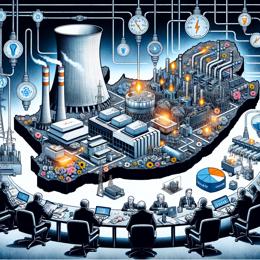
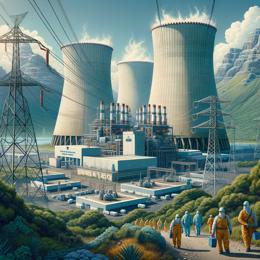
The future of the Koeberg Nuclear Power Station (KNPS), located just outside Cape Town, South Africa, is a hot-button issue as its proposed Long-Term Operation (LTO) extension unearths widespread public safety concerns. At a press briefing organized by the National Nuclear Regulator (NNR), the emphatic voices of citizens echoed the primary focus of the upcoming public hearings slated for early 2024.
The NNR's agenda is currently dominated by the rigorous review process of state-owned utility Eskom's request to extend Koeberg's operational life by an additional 20 years, beyond the original decommissioning dates of July 21, 2024, for Unit 1, and November 9, 2025, for Unit 2. Upon receipt of this application on May 10, 2021, the NNR embarked on an international benchmarking exercise to sculpt a local regulatory framework for LTO that aligns with global standards.
Peter Bester, an NNR programme manager, outlined that prolonging Koeberg's function will entail extensive overhauls and enhancements to its major structures, systems, and components (SSCs) ensuring safety during the extended operation. The NNR has clarified that, to facilitate these significant maintenance cycles, only one reactor will undergo a scheduled outage at any time, a process lasting approximately 200 days.
The NNR's first stage of public consultations unveiled a litany of worries articulated by concerned citizens. Ubert Coetzee, NRR's principal specialist for Nuclear Power Plants, categorically listed these concerns, which span radioactive waste management, perceived deficiencies in public involvement and emergency response plans, and apprehension over the facility's ageing infrastructure and potential corrosion issues. Furthermore, economic considerations, such as financing and competition with renewable energy, alongside existing challenges like load shedding and grid stability, intensify the debate.
Nuclear civil engineer Hugo Kruger voices a fiscal perspective, pressing for transparency in the costs associated with maintaining and upgrading the facility. Kruger highlighted the broader 'grid wars' between nuclear and renewable sectors, underscoring the natural monopoly of the transmission grid and undercurrents of industry competition.
Moreover, civil society organizations such as the Southern African Faith Communities Environment Institute (SAFCEI) are voicing opposition. SAFCEI's executive director, Francesca de Gasparis, outlaid concerns over the long-term consequences of handling nuclear waste and the safety case constraints, expressing unease about the potential health risks to South Africans living in the vicinity of Koeberg and the financial encumbrances that would befall future generations through extended operation.
As the narrative unfolds, the NNR has scheduled three public hearings on February 3, 10, and 17, 2024, in Tableview, Atlantis, and Athlone respectively. These sessions are instrumental in forming the NNR's final recommendation that will be presented to the board by July 2024. Public participation is encouraged, and information on joining the discussion is available on the NNR's official website.
Leave a Comment
Recent News