Content created by AI
Rockefeller Foundation Spearheads Revolutionary Coal Retirement Scheme Using Carbon Credits
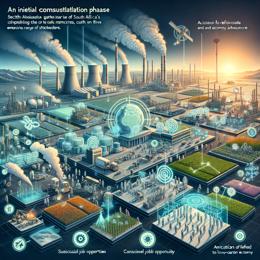
In a strategic and climate-forward initiative, the Rockefeller Foundation, along with a consortium of partners, has announced the launch of the Coal to Clean Credit Initiative (CCCI) during the COP28 climate talks in Dubai. This ambitious project, bolstered by the support of the Philippine energy giant ACEN and the Monetary Authority of Singapore, strives to retire a coal-fired power plant before the end of its traditional life span by leveraging carbon credits.
The South Luzon Thermal Energy Corporation (SLTEC) plant in the Philippines is the target of this initiative, with plans to decommission it as early as 2030—effecting a premature closure ten years ahead of its programmed shutdown. Rajiv Shah, President of the Rockefeller Foundation, underlines the critical need for creating conducive incentives for asset owners and communities and galvanizing supplementary finance to assure the success of this endeavor while fostering job opportunities.
The CCCI's approach is considered pioneering, as it stands to be the inaugural project utilizing carbon credits to bankroll an early plant closure for environmental benefits. Meanwhile, the Asian Development Bank has reported on a similar, conditional agreement to retire an Indonesian plant nearly seven years prior to its scheduled closure date via its Energy Transition Mechanism (ETM).
A key figure in this eco-centric drive is Vikram Widge, the former World Bank head of carbon finance. The strategy comprises collaborating with mechanisms such as the ETM in closing plants prematurely by converting carbon credits sourced from the CO2 reductions achieved through these early terminations. A proposal for the verification of these credits is currently under public appraisal.
The project has emerged amidst a rigorous debate about the integrity and practicality of carbon credits. Numerous environmental advocates criticize these credits for seemingly facilitating the ongoing exploitation of fossil fuels instead of pursuing outright emission reductions. Financial institutions and former project underwriters under scrutiny for supporting such fossil fuel-reliant plants are juxtaposed against calls for no bailouts, particularly from figures such as Gerry Arances, the executive director of the Philippines’ Center for Energy, Ecology, and Development.
A significant point of discussion among COP28 attendees has been the establishment of a universal carbon price. While companies advocate for this benchmark to aid in future-proofing their ventures, the consensus on this element has remained elusive. Widge outlines the necessity for a markedly higher carbon price to sustain the complete conversion efforts, which stakeholders seem unprepared to accept presently, though he asserts it could be a catalyst for initiation.
Simultaneously announced was the Energy Transition Accelerator (ETA), which US climate envoy John Kerry indicated would commence operations in April. Also devised by the Rockefeller Foundation among others, the ETA's purpose harmonizes with the CCCI's objectives, intending to expedite the shift from coal power through funding from purported high-quality carbon credits. Preliminary estimates suggest that the ETA could catalyze over $200 billion in transition finances by 2035.
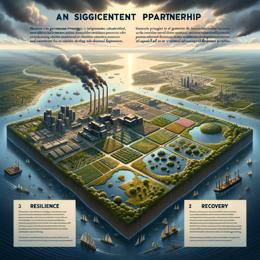
These initiatives collectively represent a transformative push to diminish carbon footprints and shift the needle towards renewable energy, part and parcel of the broader global push for environmental sustainability and climate resilience. As the world seeks to pivot away from fossil fuel dependency, such innovative financial tools and collaborative efforts could pave the way for a cleaner, greener future.
Leave a Comment
Recent News