Content created by AI
Maghreb Farmers Turn to Drones for Climate Resilience
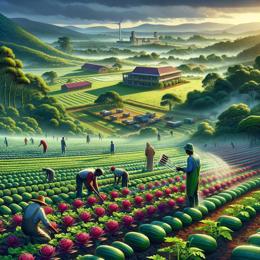
In the scenic orchards of Nabeul, eastern Tunisia, a quiet yet potent agricultural revolution is taking flight. Above the rows of lush orange trees blooms the buzzing of a new ally - drones. These high-tech partners are aiding Maghreb farmers to confront an increasingly harsh climate, characterized by prolonged droughts and unpredictable weather patterns. Yassine Gargouri, a local farmer, has enlisted RoboCare, a pioneering Tunisian startup, to ensure the vitality of his crops using these unmanned aerial scouts.
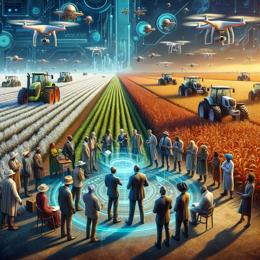
Equipped with advanced cameras and sensors, the drones dart across the sky, streaming vital data directly to farmers. Gargouri observes that conventional wisdom on seasons has become obsolete, with erratic temperatures and off-season rains becoming commonplace. He now relies on aerial insights to inform precise irrigation and tackle unforeseen agricultural threats.
At RoboCare, founder Imen Hbiri, herself a farmer's daughter, orchestrates the intricate dance of drones above the fields. The technology offers a revolutionary vantage point, revealing stress signals in crops indiscernible to farmers on the ground. With this information, targeted interventions can be made, reducing the indiscriminate use of water, fertilizers, and pesticides.
Indeed, the World Resources Institute places North African nations among the most water-stressed on the planet. RoboCare's services, currently unique in Tunisia, address this issue by enabling up to 30% water savings and reducing input costs by roughly 20%, while boosting crop yields by 30%. For Gargouri, 80% of whose expenses are tied up in agricultural input costs, this could not only preserve his livelihood but also pave the way to prosperity.
Tunisia's struggles with water shortages underpin the urgency of such innovations. Its primary water reserves, the dams, are at a meager 22% capacity, with several having ceased to operate altogether. RoboCare’s technology is a beacon of hope against this backdrop of scarcity.
Neighbors like Morocco and Algeria are not strangers to these challenges. Morocco, grappling with its own devastating drought conditions, reckons with the potential of technology in agriculture, where traditional methods for watering crops pale in comparison to the efficiency promised by drones. Algeria, too, acknowledges the role of drones and satellites in land optimization.
The potential for growth in technology use is immense, yet, in Tunisia, adoption rates hover around a modest 10%, largely hindered by regulation. Drone operation requires permits, acquisition of which can be tortuous. Hbiri yearns for a regulatory environment that nurtures innovation, declining bureaucratic labyrinths that throttle their technological advance.
As these farmers and technologists forge ahead, the confluence of tradition and innovation narrates a story of resilience, where the ancient art of agriculture embraces the digital age in a collective stride toward a sustainable future.
#GOOGLE_AD
Leave a Comment
Recent News